Subcutaneous curl
Some tightly curled follicles continue to curve beneath the scalp, which can make extraction more technically demanding.
Specialist planning for tightly curled hair
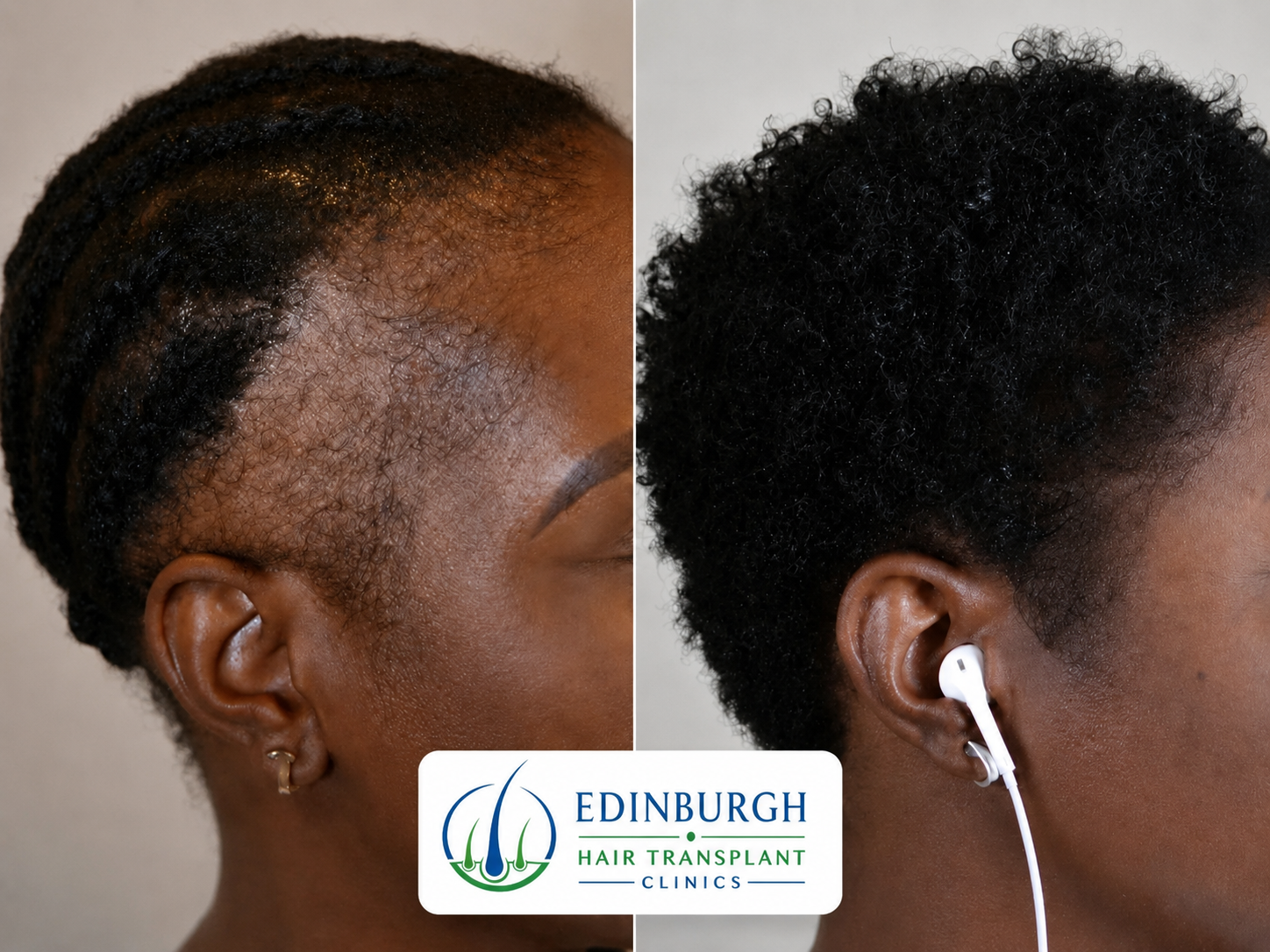
Afro-textured and tightly curled hair can provide strong visual coverage, but the follicles may curve beneath the skin and require careful donor assessment and extraction planning.
Edinburgh Hair Transplant Clinics provides consultation-led assessment covering curl pattern, donor density, scalp condition, hair-loss cause, natural hairline design, FUE hair transplantation, recovery, costs and realistic expectations.
Individual donor assessment
Hair curl visible above the scalp does not always show the exact direction of the follicle beneath the skin. For this reason, extraction planning should be based on the individual donor area rather than assumptions about ethnicity or external hair appearance.
Some tightly curled follicles continue to curve beneath the scalp, which can make extraction more technically demanding.
Density, follicular grouping, hair calibre and the safe donor zone should be assessed before estimating graft numbers.
Skin thickness and firmness can affect extraction difficulty and should form part of donor-area planning.
Active inflammation, irritation, scarring or unexplained hair loss may require medical assessment before surgery.
Hairline shape, irregularity, curl direction and facial proportions should be planned together.
Extraction should be distributed carefully to reduce the risk of visible thinning or an overharvested donor area.
Treatment stages
Your hair-loss history, scalp condition, medical information, treatment goals and previous procedures are reviewed.
The donor area is assessed for density, curl, calibre, follicular grouping, scarring and safe extraction capacity.
The hairline or recipient area is planned according to facial proportions, curl pattern and future hair-loss risk.
The extraction method and instruments are selected according to the individual follicle and skin characteristics.
Grafts are placed at planned angles, directions and spacing to blend with the existing textured hair.
Individual instructions cover graft protection, washing, sleeping, exercise, donor healing and follow-up.
Treatment suitability
Treatment-method comparison
| Method | How it works | Afro-textured hair consideration |
|---|---|---|
| FUE | Individual follicular units are extracted from the donor area and placed into the treatment area. | Curved follicles can increase extraction difficulty. Punch selection, extraction technique and donor testing may be important. |
| DHI | Usually combines individual follicular-unit extraction with implanter-device placement. | DHI describes the placement stage and does not remove the need for careful extraction of curved donor follicles. |
| FUT | A donor strip is removed and divided into follicular-unit grafts before implantation. | FUT avoids individual punch extraction but produces a linear donor scar and is suitable only for selected patients. |
Individual treatment quotation
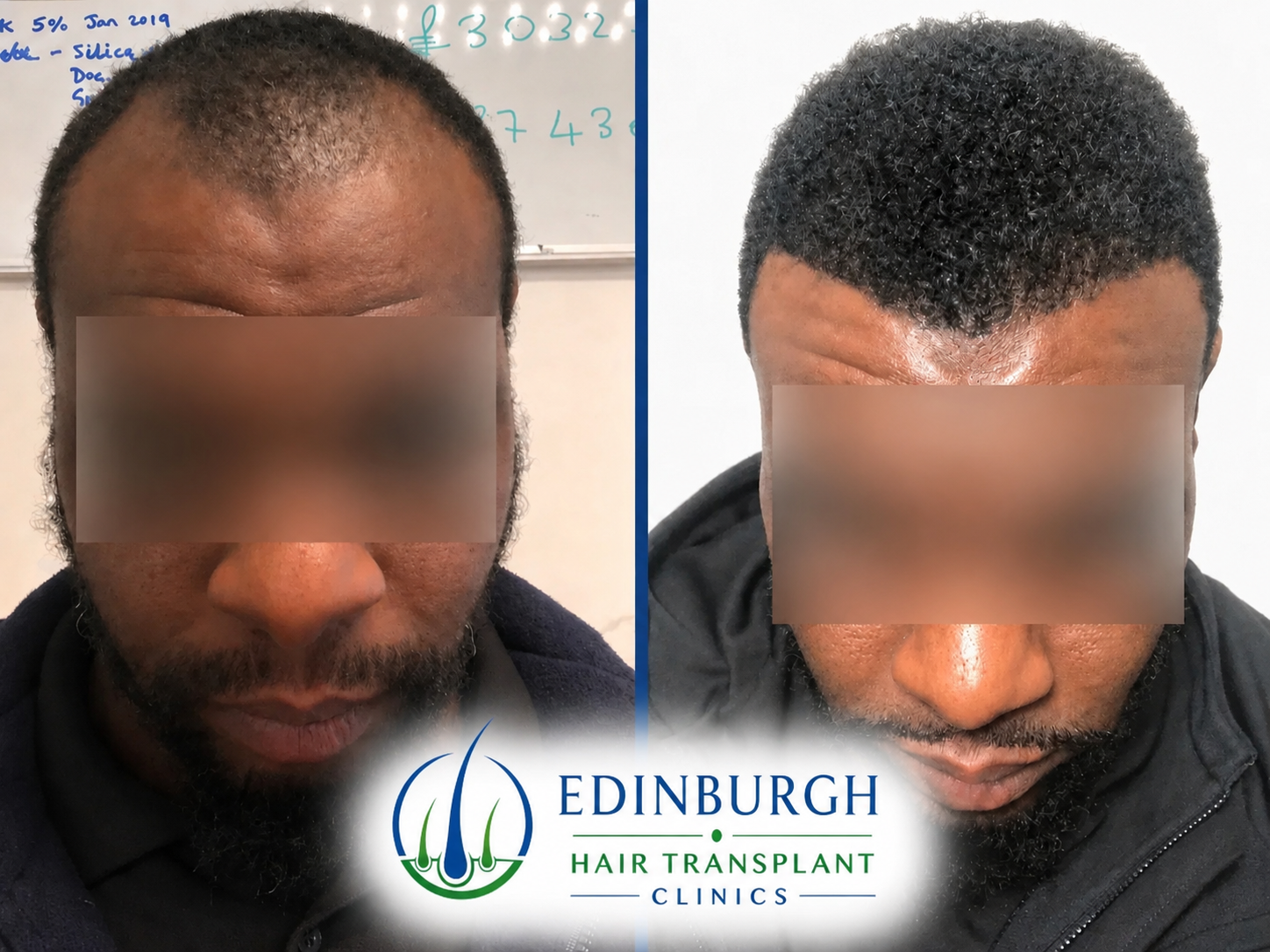
The final cost should be based on assessment rather than hair type alone. The treatment area, estimated graft requirement, extraction difficulty, donor quality and procedure plan all affect the quotation.
A consultation allows the clinic to assess your donor area, treatment goals and likely graft requirements before confirming a price.
Healing and growth
Temporary redness, swelling, tenderness, small scabs and donor-area sensitivity may occur after treatment.
Transplanted hairs may shed during the early weeks before gradual new growth begins.
New growth may initially appear fine, uneven or wiry before gradually developing and blending with the surrounding hair.
Consultation-led planning
Patient feedback
Read patient feedback about consultation, communication, treatment-day organisation, recovery support and aftercare.
Reviews may not display inside the Snapps editor. Republish and check the live page in a normal browser.
Edinburgh clinic location
83 Princes St
Edinburgh
EH2 2ER
Contact the clinic before travelling to confirm your consultation time and appointment arrangements.
Telephone:
0131 639 0004
Common treatment questions
Yes, selected patients with Afro-textured, curly or tightly coiled hair may be suitable for transplantation. Suitability depends on the donor area, scalp health, follicle characteristics, hair-loss cause and treatment goals.
Some tightly curled follicles curve beneath the scalp. This can make individual graft extraction more technically demanding and may increase the risk of cutting or damaging follicles if the extraction technique is unsuitable.
FUE may be suitable for selected patients following detailed donor assessment. Extraction technique, punch choice, skin characteristics and follicle curl should be considered individually.
DHI may be discussed for selected patients. DHI usually relates to the graft-placement stage and does not remove the need for careful extraction of tightly curled donor follicles.
Curl and hair calibre can sometimes create strong visual coverage, but density and final appearance still depend on donor supply, graft numbers, survival, placement and continued native-hair loss.
Selected stable traction-related hair loss may be considered for transplantation. Ongoing traction, inflammation or scarring should be addressed before surgery.
Cost depends on the treatment area, estimated graft number, donor quality, extraction complexity, selected method and aftercare requirements. An individual quotation should follow assessment.
No. Graft survival, growth, density, healing, donor appearance and the final cosmetic result vary between patients.
Request an assessment
Contact Edinburgh Hair Transplant Clinics to discuss your donor area, curl pattern, scalp health, hair-loss cause, natural hairline design, FUE suitability, costs, recovery and realistic expectations.
