Frontal fibrosing alopecia: signs, assessment and treatment
How to recognise changes at the hairline and eyebrows, why early assessment matters and what treatment aims to achieve.

Published: 11 October 2026
Updated: 11 October 2026
Contents
- What happens in frontal fibrosing alopecia?
- Signs at the hairline and eyebrows
- Who can develop FFA?
- How FFA differs from other hair loss
- What happens during diagnosis?
- What treatment is trying to achieve
- Medicines a specialist may discuss
- Can minoxidil reverse the scarring?
- Is a hair transplant suitable?
- Living with changes while treatment is reviewed
- Questions and answers
Frontal fibrosing alopecia, usually shortened to FFA, is a form of scarring hair loss that often affects the front of the hairline and the eyebrows. Early assessment matters because treatment aims to protect follicles that remain. It cannot reliably restore follicles that have already been destroyed and replaced by scar tissue.
A receding hairline is not automatically FFA. Inherited thinning, traction and other conditions can also change the front of the scalp. The pattern, the condition of the skin and an examination by a suitably qualified clinician help distinguish them. If recession is accompanied by eyebrow loss, discomfort or a smooth band of skin, arrange a medical assessment rather than treating it as a cosmetic hairline problem alone.
What happens in frontal fibrosing alopecia?
FFA is an inflammatory condition affecting hair follicles. “Fibrosing” refers to the scarring process. Once a follicle has been permanently lost, stimulating growth is a different challenge from treating a follicle that is still present but producing a finer hair.
The condition is often discussed alongside lichen planopilaris, another form of scarring alopecia. A dermatologist may explain that relationship during an assessment, but the most useful question for an individual is what the examination shows and whether the condition appears active.
The British Association of Dermatologists' FFA leaflet explains the condition and the range of treatments that may be considered. Treatment responses vary, so the plan should include review rather than a promise of a particular amount of regrowth.
Signs at the hairline and eyebrows
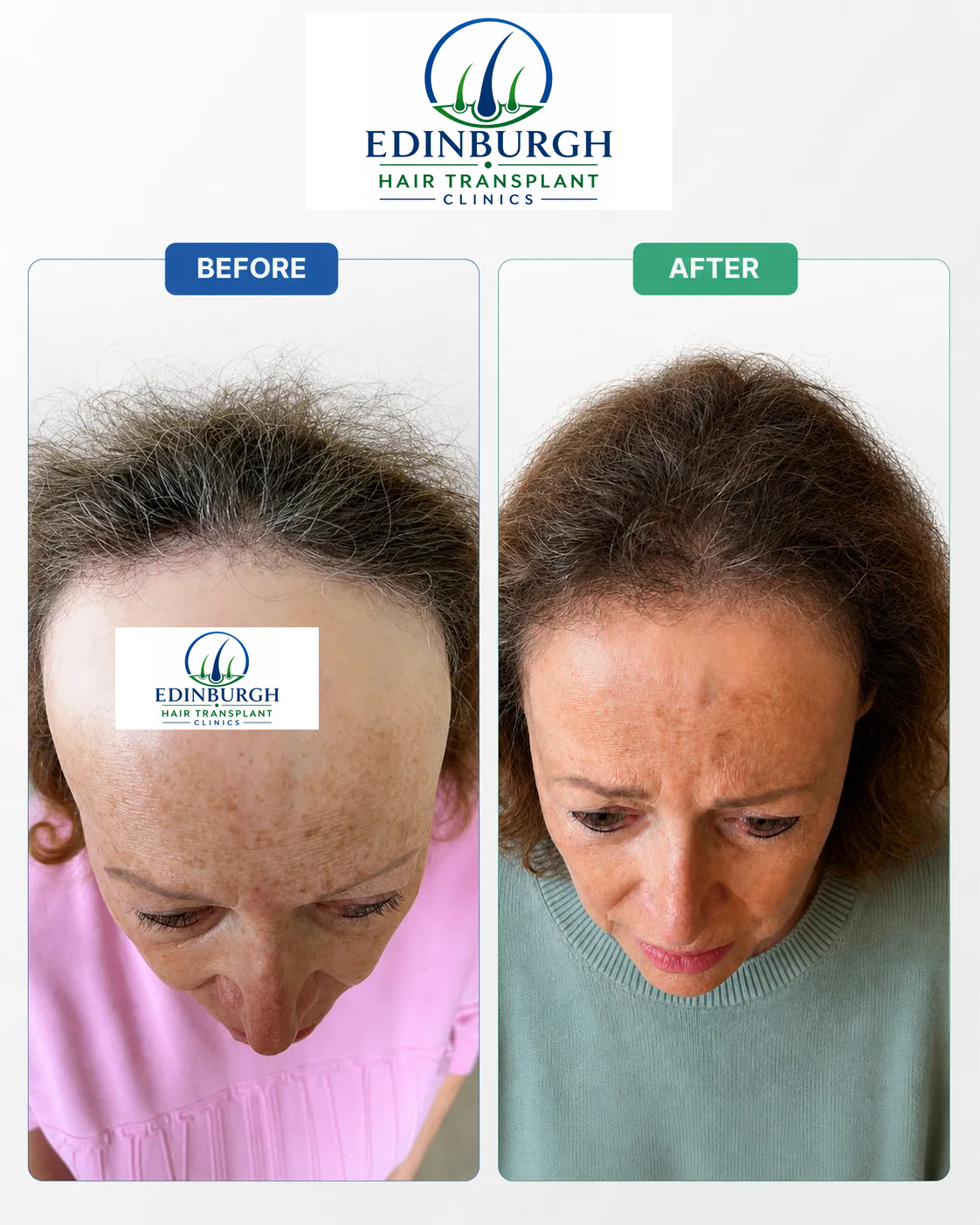
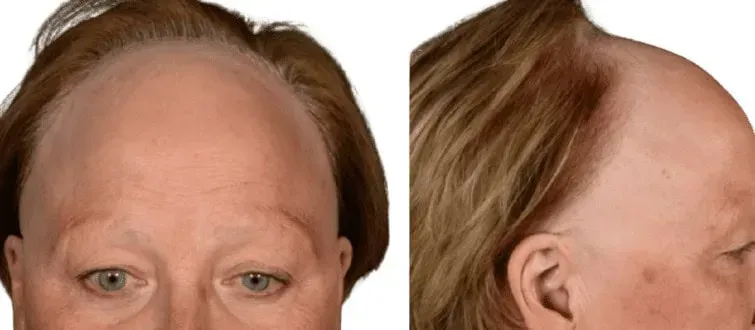
Changes may develop gradually. The hairline can move backwards across the forehead or around the temples, sometimes leaving a paler, smoother area. There may be redness or scale around hairs at the edge of the affected area. Some people notice itching, tenderness or burning; others have little discomfort.
Eyebrow thinning is another important feature to mention. It should not automatically be attributed to age, over-plucking or a cosmetic product, particularly when hairline changes are happening as well. Other areas of hair can also be affected.
If you are unsure what has changed, older photographs can help establish the sequence. Choose images where the hairline is visible and the hairstyle is reasonably comparable. A diagnosis should not rest on photographs alone, but they can show a change that developed too slowly to notice from day to day.
Who can develop FFA?
FFA is most often recognised in women after menopause, but it can also occur in younger women and in men. Being outside the most commonly affected group does not rule it out. Equally, menopause and a receding hairline are not enough to diagnose it.
Current Alopecia UK information about FFA discusses the uncertainty around its causes. Immune activity, inherited susceptibility and possible environmental influences are being investigated. A theory about a trigger is not the same as proof that a particular product caused your condition.
Avoid making major changes to prescribed treatment or stopping sun protection on the basis of an online theory. Bring questions about products and medicines to the clinician assessing you, along with a record of when you used them.
How FFA differs from other hair loss
Pattern hair loss commonly changes hair density and the calibre of hairs. Traction is associated with repeated pulling from hairstyles or other tension. Telogen effluvium involves increased shedding. FFA is distinguished by the inflammatory scarring process, although more than one condition can occur together.
This is why a treatment chosen for one diagnosis should not simply be transferred to another. Our information about women's hair restoration explains why suitability depends on the type of loss, rather than the person's gender or the size of a visible gap.
At your assessment, ask whether the clinician thinks one process explains everything. If there is both FFA and pattern thinning, the treatments may have different purposes. Understanding which problem each treatment addresses helps prevent confusion when one part improves and another does not.
What happens during diagnosis?
The clinician will ask about the onset, progression, symptoms, medical history and treatments already tried. Examination may include looking closely at follicle openings and the edge of the hairline with a magnifying device.
Sometimes a scalp biopsy is needed to clarify the diagnosis. This involves taking a small sample for laboratory examination, usually under local anaesthetic. Ask why it is recommended, where the sample will be taken and how the result will influence treatment.
The Imperial College Healthcare hair-disorders service describes investigations such as trichoscopy and, in selected cases, biopsy. Not everyone needs every investigation. The choice should follow the findings and the question the clinician is trying to answer.
What treatment is trying to achieve
The main aim is to reduce activity and preserve remaining hair. An unchanged hairline over a meaningful follow-up period can therefore be an important outcome, even if a previously bare area has not filled in.
Treatment options can include medicines applied to the scalp, injections and oral medicines. The choice depends on the findings, your health, other treatment and the balance of potential benefit and unwanted effects. Ask how the clinician will judge whether the condition has settled.
Do not evaluate a treatment only by whether you can see new hair. A review may consider symptoms, the appearance of the hairline and changes in measurements or photographs. Ask which of those observations is most relevant to your plan and what would prompt a change.
Medicines a specialist may discuss
Topical corticosteroids or steroid injections may be used to address inflammation. The Gloucestershire Hospitals information on local steroid injections includes their use for inflammatory hair conditions. The potential benefits and local side effects need discussion before treatment.
Other options may include topical calcineurin inhibitors, hydroxychloroquine or other specialist medicines. Some require specific monitoring. If a medicine is proposed, ask what checks are needed, how long a trial is reasonable and who will arrange follow-up.
Finasteride or dutasteride may also arise in a specialist discussion, particularly where other forms of thinning coexist. Their use, suitability and precautions require an individual prescribing decision. They should not be presented as a cure for scarred areas, and a treatment someone else receives is not an instruction for you to take it.
Can minoxidil reverse the scarring?
Minoxidil is used for certain types of hair loss, but it should not be described as a way to recreate follicles already destroyed by scarring. A clinician may discuss it for a coexisting pattern of thinning or a particular treatment objective.
Ask what part of your diagnosis it is intended to address. That question matters when several products are prescribed together: one may target inflammation while another is intended to support hair affected by a different process.
If an application causes irritation, contact the prescriber rather than assuming discomfort is necessary for improvement. Bring the exact product and directions to your review. Similar-looking preparations can have different ingredients and instructions.
Is a hair transplant suitable?
A transplant is not the first response to active or suspected FFA. The inflammatory condition needs specialist assessment, and surgery does not remove its underlying cause. A previously stable-looking hairline also needs careful evaluation before a procedure is considered.
If surgery is discussed after the condition has been assessed over time, ask how stability was judged, what the remaining uncertainties are and how follow-up would work. Do not rely on a fixed waiting period advertised as a guarantee.
The same caution applies to eyebrow transplantation. Eyebrow loss associated with a medical condition needs diagnosis before a cosmetic solution is planned. The reason for the loss can materially change the advice.
Living with changes while treatment is reviewed
A haircut, fringe, hairpiece or eyebrow cosmetic may help with appearance. These choices do not need to wait until all medical questions have been answered. Avoid styles that pull tightly on the remaining hair, and discuss any cosmetic procedure involving inflamed skin with the clinician.
Keep review photographs consistent, but avoid judging the hairline several times a day. An agreed monitoring schedule is more useful than repeated comparisons in changing light. Note new discomfort or other meaningful changes so they can be discussed.
Hair loss can also affect confidence and daily activities. Tell your GP or dermatologist if that is happening. Practical support and medical treatment address different parts of the problem, and it is reasonable to ask about both.
Questions and answers
Should I wait until the recession is obvious?
No. If you are concerned about a changing hairline, eyebrow loss or persistent scalp symptoms, arrange an assessment. Early advice is particularly useful when scarring is a possibility. Waiting for a larger bare area does not make the decision easier.
Can FFA occur without itching?
Yes. A lack of discomfort does not rule it out. Describe visible changes as well as symptoms. The examination and the pattern over time are more informative than the presence or absence of itching alone.
Will blood tests diagnose FFA?
Blood tests may help investigate related questions, but they do not replace examination of the scalp. A dermatologist may sometimes recommend a biopsy. Ask what each investigation is intended to clarify rather than assuming that a normal blood result excludes the condition.
Does treatment always restore the eyebrows?
No. The goal and likely outcome depend on the condition of the follicles and the stage of the problem. Discuss preservation, possible improvement and cosmetic options separately. Avoid accepting a guarantee of complete eyebrow regrowth before assessment.
Who should I contact in Edinburgh?
Start with your GP if you suspect a medical scalp condition or need a dermatology assessment. You can also contact our Edinburgh team about hair-restoration questions. Explain any diagnosis or ongoing investigations so that suitability is discussed in the right clinical context.