




Please note I am writing this review based on the process not the result as Will not know the full extent of the result for a few months. The process of booking was great, Kevin was very helpful from the very beginning and was very quick at replying and very knowledgeable with any questions or queries I had. I felt well informed and prepared for the hair transplant. On the day itself, I was welcomed into the clinic and talked through the plan for the day. Throughout the procedure I was very well looked after and cared for. It went very smoothly and I was comfortable the full time once the local anesthetic was in I did not feel anything. Very thorough after care was provided along with everything I needed to take care of the transplanted hair initially so did not have to worry about purchasing anything, shampoo, spray bottle and pillow all included. Along with contact details incase required. So far I am amazed by the results, it already looks incredible. I have never felt so confident in photos and this is just the implanted hair, looking forward to seeing how it develops over the coming months. Be prepared for a couple of sleepness nights following the procedure but so worth it already! Highly recommend booking your hair transplant with this company. The support throughout is so valuable. They really care for you and working with you towards the result you are looking for. Will happily post an update to this review at the 6 month mark but do not hesitate to use this company, 5* and first class.
Contents
Why Does Hair Loss Happen?

Hair grows in a cycle. While some hairs are growing, others are resting and getting ready to fall out. Losing around 50 to 100 hairs a day is normal and often goes unnoticed. A lasting change in your hairline, parting or overall density is more useful to discuss than the number of loose hairs you notice on one day.
Inherited hair loss is a common cause of gradual thinning. It can run through either side of the family, and relatives may develop different patterns at different ages. Having a parent with hair loss does not tell you exactly when yours will start or how far it will progress.
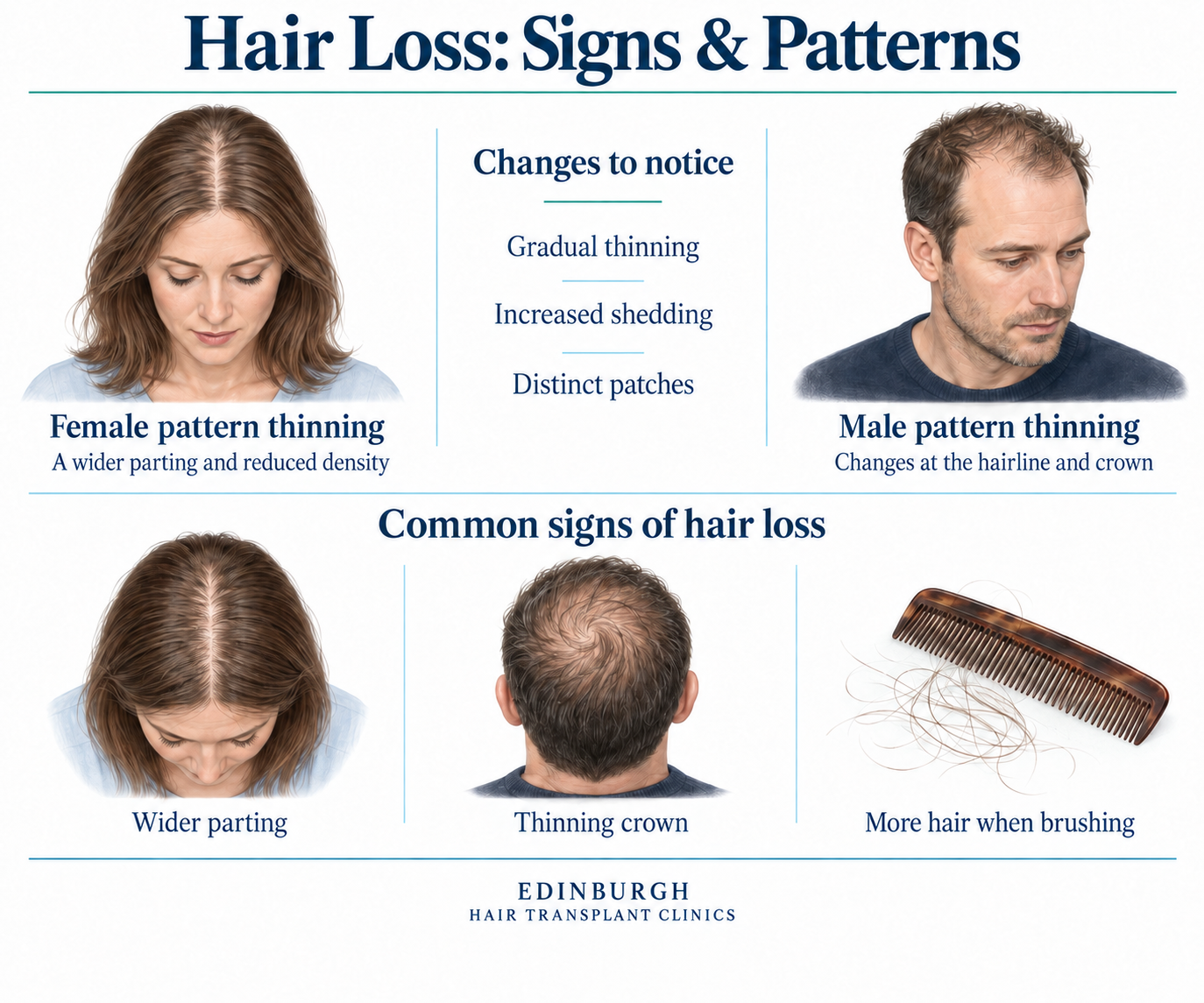
In men, male pattern hair loss often begins around the temples, hairline or crown. Genetic factors and sensitivity to the hormone DHT can cause affected follicles to produce progressively finer hairs. The change is usually gradual, although the rate differs from person to person.
Women may notice a wider parting or less volume through the top of the scalp. Female pattern hair loss becomes more common with age, but many affected women have normal hormone levels. A sudden increase in shedding, including after childbirth, can have a different explanation from gradual pattern thinning. Read our Hair Loss in Women guide for more about common causes, assessment and treatment options.
What Can Affect Hair Loss?
Hair loss can happen at any age. The way it starts, the areas affected and the condition of your scalp all help a doctor work out the cause. New patches, a widening parting and shedding across the whole scalp should not automatically be treated as the same problem.
Illness, stress and changes in the body can interrupt the normal hair cycle. The resulting shedding, called telogen effluvium, may start months after an illness, operation, childbirth, marked weight loss or another trigger. It usually affects hair across the scalp. Shedding can settle before the hair's previous thickness returns.
Nutrition and thyroid conditions are also relevant. Iron deficiency, a restrictive diet or a thyroid problem may contribute to thinning or shedding. Depending on your symptoms and history, your doctor may suggest blood tests. Supplements are not a substitute for establishing whether a deficiency is actually present.
Alopecia areata is an autoimmune condition that can cause smooth bald patches on the scalp, beard or other areas. Hair may regrow, but there is no fixed timetable and further patches can develop. A GP or dermatologist can discuss the diagnosis and available treatments.
Medicines and cancer treatment can affect the hair too. Tell your doctor about any medicines or supplements you take and when you started them. If you think a prescription medicine is involved, speak to the prescriber before changing or stopping it.
Tight hairstyles and repeated pulling can damage follicles, particularly around the edges of the scalp. Reducing tension early gives the hair a better chance to recover; longstanding traction can cause permanent loss. Heat and chemical damage can also break the hair shaft, which is different from losing a follicle.
Scalp inflammation, persistent soreness, scaling or itching needs attention. Some inflammatory conditions can damage follicles and leave scarring. Identifying the condition and treating any active disease comes before considering a cosmetic procedure.
What Can You Do About Hair Loss?
The right approach depends on the cause. It may involve treating a medical condition, allowing temporary shedding to recover, changing hair-care habits or discussing medication. Some people prefer a wig, hairpiece or cosmetic camouflage. You do not have to decide on a treatment before you have had the chance to understand the options.
Minoxidil is used for male and female pattern hair loss. Finasteride is an option for suitable men. Neither works for everyone, and continued use is needed to maintain the benefit. A doctor or pharmacist should explain suitability and side effects. The NHS hair loss information is a useful starting point.
A FUE hair transplant or FUT procedure may be considered for suitable areas of permanent hair loss. It does not treat every cause of thinning. An assessment with Dr Harpreet Kalra considers your existing hair, donor supply, medical history and the possibility of further loss before surgery is recommended.
When Should You Seek Advice?
Speak to your GP if you are worried about hair loss, especially if it is sudden, patchy or accompanied by scalp symptoms. Explain when it started, whether it has changed and whether it is affecting your confidence or wellbeing. Your GP can help establish the cause and decide whether tests or a dermatology referral would be useful.
If you are considering cosmetic treatment after that assessment, our Edinburgh team can explain the consultation arrangements and answer your questions. Use our consultation form to tell us what you have noticed and any diagnosis or treatment you have already received.
Patient Testimonials
Your Questions Answered
If you have questions about hair loss or would like to discuss your treatment options, our Edinburgh team can help you arrange an assessment and explain what to expect at your appointment.
Call 0131 639 0004 or complete our consultation form. We are at 83 Princes Street, Edinburgh, EH2 2ER. Tell us about any previous diagnosis or treatment when you get in touch, so we can help you prepare for your visit.


