

Please note I am writing this review based on the process not the result as Will not know the full extent of the result for a few months. The process of booking was great, Kevin was very helpful from the very beginning and was very quick at replying and very knowledgeable with any questions or queries I had. I felt well informed and prepared for the hair transplant. On the day itself, I was welcomed into the clinic and talked through the plan for the day. Throughout the procedure I was very well looked after and cared for. It went very smoothly and I was comfortable the full time once the local anesthetic was in I did not feel anything. Very thorough after care was provided along with everything I needed to take care of the transplanted hair initially so did not have to worry about purchasing anything, shampoo, spray bottle and pillow all included. Along with contact details incase required. So far I am amazed by the results, it already looks incredible. I have never felt so confident in photos and this is just the implanted hair, looking forward to seeing how it develops over the coming months. Be prepared for a couple of sleepness nights following the procedure but so worth it already! Highly recommend booking your hair transplant with this company. The support throughout is so valuable. They really care for you and working with you towards the result you are looking for. Will happily post an update to this review at the 6 month mark but do not hesitate to use this company, 5* and first class.
PRP Hair Treatment Edinburgh
PRP is an effective, non-surgical treatment for men and women who want to prevent further hair loss, strengthen thinning areas and stimulate natural hair growth.
- Package price: 3 PRP sessions for £495
- Advanced PRP kit: harvests up to four times more platelets
- Treatment course: normally 3–6 sessions
- Appointment time: approximately 45–90 minutes
- Recovery: minimal downtime
Dr Harpreet Kalra assesses the pattern of thinning and creates a treatment plan built around the areas where stronger density and growth are required.
Book a Free Consultation

PRP Hair Treatment for Thinning Hair
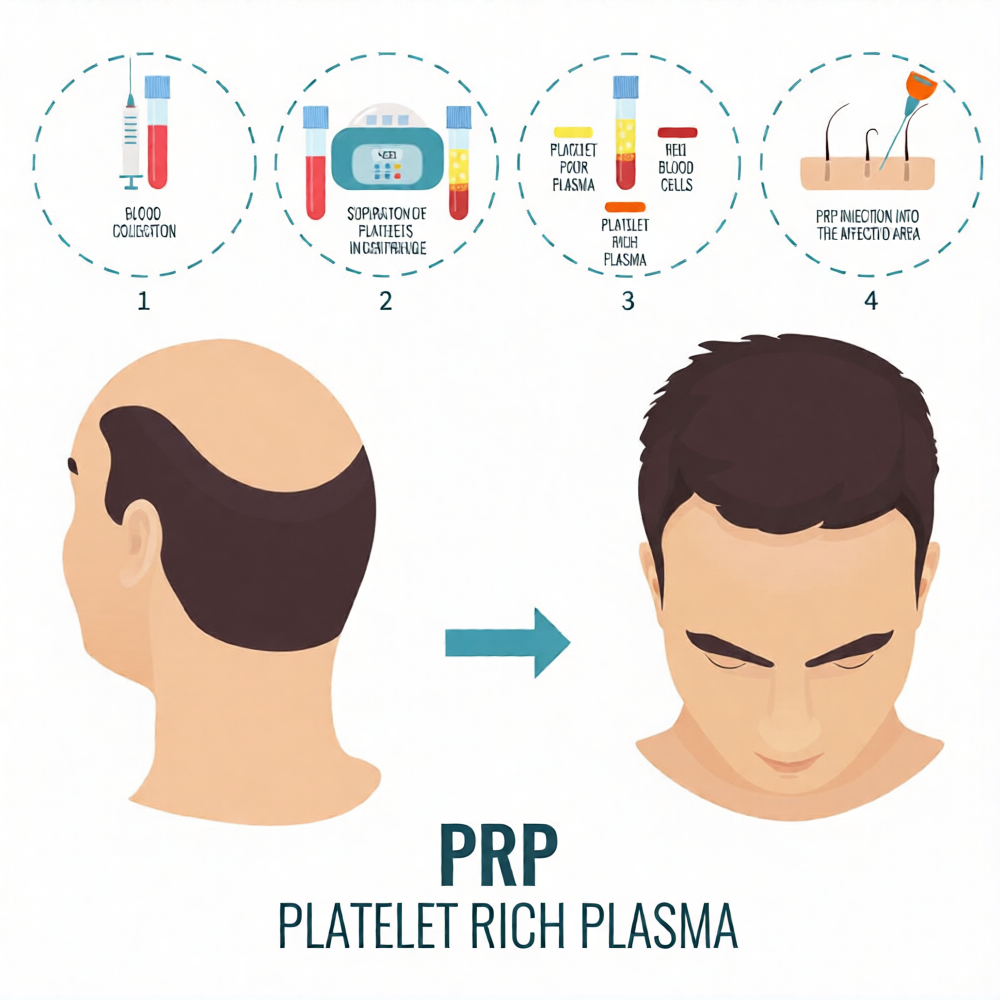
Platelet-rich plasma therapy uses the healing and growth factors already present in your blood. A small blood sample is processed in a centrifuge, creating a concentrated plasma preparation that is injected through the areas affected by thinning.
The treatment is designed to stimulate weakened follicles, improve scalp circulation and encourage stronger, thicker growth. It is used for male and female pattern hair loss, early crown thinning, a widening parting and reduced density through the frontal or mid-scalp areas.
PRP does not require incisions, stitches or donor-hair removal. Patients leave the clinic after treatment and return to their normal routine with minimal interruption.
It can be booked as a standalone course or combined with FUE, DHI or FUT surgery.
How Does PRP Hair Treatment Work?
A small blood sample is taken from your arm and placed into a centrifuge. The spinning process separates the platelet-rich plasma from the red blood cells, leaving a concentrated preparation ready for treatment.
Our specialist collection tubes are designed to harvest up to four times more platelets than standard PRP kits. That higher concentration delivers more growth-factor activity to the follicles during every appointment.
The prepared PRP is injected across the thinning area at carefully controlled depths. Placement matters: the depth, spacing and distribution determine how evenly the treatment reaches the follicles.
More Platelets, Accurate Placement and a Stronger Treatment
Not every clinic produces the same PRP concentration or follows the same injection method. Our treatment combines a high-yield collection system with doctor-led planning, giving each session the strength and coverage required for visible improvement through the complete treatment area.
Who Gets the Best Results from PRP?
PRP produces its strongest results when thinning follicles are still present. Men commonly use it for early crown loss, reduced density through the top of the scalp and the first stages of a receding hairline. Women use PRP to improve a widening parting and diffuse thinning across the upper scalp.
The treatment is also used after hair transplant surgery to support healing, reduce shedding and improve the environment around newly implanted grafts.
Completely bald areas require transplanted follicles rather than injections. During consultation, Dr Kalra examines the scalp and explains whether PRP, medication or surgical restoration offers the strongest route forward.
PRP for Men and Women
Because PRP uses the patient’s own blood, the same treatment principle works across both male and female pattern hair loss. The injection plan is adjusted to match the pattern, density and size of the thinning area.
What Happens at a PRP Appointment?
Your appointment begins with a review of the areas being treated and progress photographs where required. A small blood sample is then taken from the arm and immediately processed inside the clinic.
Blood preparation: the sample is placed into the centrifuge, separating and concentrating the platelet-rich plasma. The prepared PRP is collected into sterile syringes for treatment.
Scalp treatment: injections are placed throughout the thinning area using a consistent pattern. The aim is complete coverage rather than concentrating the plasma into only a few points.
After treatment: the scalp is checked and you leave the clinic immediately. A complete appointment normally takes between 45 and 90 minutes, making PRP straightforward to fit around work and daily commitments.
How Many PRP Sessions Are Needed?
Most patients begin with a course of 3–6 treatments spaced 4–6 weeks apart. Each appointment builds on the previous session while the follicles move through their natural growth cycle.
The first three months: reduced shedding and improved hair strength are usually the earliest changes. The scalp begins holding coverage more effectively as weaker hairs respond to treatment.
Between three and six months: improvements in density, thickness and scalp coverage become easier to see. Consistent photographs provide a more accurate comparison than day-to-day observation.
After the initial course: maintenance treatment every 4–6 months helps protect the result and continue stimulating follicles affected by progressive pattern hair loss.
Why Consistency Produces Better Results
PRP is designed as an ongoing treatment rather than a single injection. Completing the recommended course gives the follicles repeated growth-factor exposure and produces a stronger response than disconnected appointments.
PRP Hair Treatment Cost in Edinburgh
Three PRP sessions for £495
The package includes three complete appointments with blood collection, centrifuge processing, high-concentration PRP preparation and targeted scalp injections.
Our pricing combines an advanced collection kit designed to harvest up to four times more platelets with doctor-led treatment planning. The focus is treatment strength and accurate coverage rather than providing a low-concentration standard injection.
Patients who require a longer 4–6 session course receive a clear schedule based on the size of the treatment area and the response recorded during the initial appointments.
Book a PRP ConsultationWhat PRP Can Do for Thinning Hair
PRP is designed to reactivate and strengthen follicles before they become permanently inactive. A successful course improves the way the hair covers the scalp, reduces excessive shedding and increases the strength and calibre of existing growth.
Stronger Density Without Surgery
There are no scalp incisions, stitches or donor scars. Patients receive targeted treatment through the areas that need greater density and return to normal activities with minimal downtime.
Natural Growth Factors from Your Own Blood
The platelets release growth factors involved in tissue repair, circulation and cellular regeneration. Concentrating those platelets and placing them around weakening follicles creates the stimulation required for thicker, healthier-looking growth.
Supported by Clinical Research
A systematic review and meta-analysis of randomised clinical trials found improvements in hair density and reductions in hair loss following PRP treatment.
Recovery After PRP Hair Treatment
PRP has minimal downtime. Most patients leave the clinic immediately and return to work or their normal routine on the same day.
The scalp can feel tender or tight around the injection points for the first 24–48 hours. Mild redness and pinpoint swelling settle quickly and there is no visible surgical scar.
Patients should avoid strenuous exercise, saunas, steam rooms and excessive heat for 48 hours. Hair should be washed gently according to the aftercare instructions provided at the clinic.
Your next appointment is normally arranged 4–6 weeks later, allowing the current treatment to begin working while maintaining the momentum of the course.
PRP with Hair Transplants and Medication
PRP works particularly well as part of a wider hair-restoration plan. It strengthens follicles that are still present, while a hair transplant replaces follicles in established bald areas.
PRP after Hair Transplant Surgery
After FUE, DHI or FUT, PRP supports healing, reduces post-operative shedding and improves the environment around the implanted grafts.
PRP with Finasteride or Minoxidil
Medication and PRP target hair loss in different ways. Combining them creates a broader treatment plan that controls progressive thinning while stimulating stronger growth. Read our hair-loss medication guide.
Why Choose Edinburgh Hair Transplant Clinics for PRP?
The quality of PRP depends on the concentration produced and the accuracy of the injections. We control both parts of the treatment rather than relying on a standard low-yield kit or handing injections to unqualified salon staff.
Advanced High-Yield PRP Collection
Our specialist tubes are designed to harvest up to four times more platelets than standard kits. The higher concentration delivers greater growth-factor activity through the areas affected by thinning.
Doctor-Led Planning and Precise Treatment
Dr Kalra assesses the hair-loss pattern, marks the correct treatment area and plans the depth and distribution of the injections. That precision ensures the PRP reaches the follicles evenly across the complete area.
A Treatment Course Built Around Your Hair
Progress is recorded with repeat photography, allowing the number of sessions and maintenance schedule to follow the actual response rather than a generic one-size-fits-all package.
PRP Treatment with Dr Harpreet Kalra
Dr Harpreet Kalra is registered with the General Medical Council under GMC number 7126076 and provides consultation-led hair restoration at Edinburgh Hair Transplant Clinics.
His assessment covers the pattern of thinning, hair calibre, scalp health, family history and the amount of active hair remaining through the proposed treatment area.
Dr Kalra then plans the injection area, number of sessions and whether PRP should be combined with medication or hair transplant surgery. Progress photographs are used to track the response and plan maintenance treatment.
Book a Free Consultation
Patient Reviews
Read what patients have said about their experience with Edinburgh Hair Transplant Clinics.
PRP Hair Treatment FAQs
What is PRP hair treatment?
PRP uses concentrated platelets prepared from a sample of your own blood. The plasma is injected into thinning scalp areas to stimulate follicles, improve circulation and encourage stronger hair growth.
How many PRP sessions do I need?
Most patients complete 3–6 sessions spaced 4–6 weeks apart. Maintenance treatment every 4–6 months helps sustain and build on the result.
When will I see PRP results?
Changes in shedding and hair strength normally begin during the first three months. Improvements in density and scalp coverage become clearer between three and six months.
How much does PRP cost in Edinburgh?
A package of three PRP sessions costs £495 and includes blood collection, centrifuge preparation and targeted scalp injections at each appointment.
Is PRP suitable for women?
Yes. PRP is used for female-pattern thinning, widening partings and diffuse loss where follicles remain active through the treatment area.
Does PRP hurt?
Patients feel brief discomfort during the injections and temporary scalp tenderness afterwards. Treatment requires no surgery, incisions or stitches.
Can PRP be used after a hair transplant?
Yes. PRP supports healing, reduces post-operative shedding and improves the environment around newly implanted grafts.


