
Hair Transplant Aftercare Edinburgh
A hair transplant does not finish when the final graft has been placed. The first days after surgery are an important part of treatment because newly transplanted follicles need time to settle while the recipient area and donor area begin to heal.
Good aftercare means protecting the grafts from unnecessary contact, washing the scalp correctly, looking after the donor area and avoiding activities that could interfere with early healing. It also means understanding the difference between normal postoperative changes and symptoms that should be discussed with the clinic.
Patients treated through Edinburgh Hair Transplant Clinics receive recovery instructions based on the procedure performed. Treatment planning with Dr Harpreet Kalra covers the expected healing period as well as the surgery itself.


Why Hair Transplant Aftercare Is Important
Hair transplant surgery involves moving living follicular units from the donor area into carefully planned recipient sites. Immediately after placement, those sites are fresh. The scalp therefore needs to be treated differently from normal hair during the early recovery period.
The first priority is to avoid unnecessary trauma. Scratching the recipient area, rubbing it with a towel, catching it while dressing or placing strong pressure directly over freshly implanted grafts creates avoidable risk at precisely the stage when the scalp should be left to settle.
Aftercare also applies to the area from which the grafts were taken. Following FUE, the back and sides of the scalp contain many individual extraction sites. Following FUT, the donor region contains a closed linear wound. These are different surgical wounds and they should not be treated as though the donor area has been untouched.
Correct recovery is not about following the most complicated routine possible. It is about following the instructions supplied for your own operation. That includes when washing starts, how the recipient area should be cleaned, whether a spray has been supplied, what medicines have been prescribed and when normal activity can resume.
Your Own Instructions Come First
Another patient's photographs or recovery routine are not a substitute for the instructions from the team that performed your surgery. Graft numbers, recipient location, donor technique, scalp condition and individual healing all change what recovery can look like.
If you have been given a particular washing date, sleeping position or activity restriction, follow that plan. Do not change it because somebody online started shampooing earlier, returned to the gym sooner or used a different product.
Aftercare and Long-Term Hair Loss Are Different
Immediate aftercare protects the surgical result while the skin heals. It does not stop genetically susceptible native hair elsewhere on the scalp from continuing to thin in future years.
That distinction is important. A transplanted hairline can develop well while untreated hair further behind it continues to miniaturise. Long-term planning, donor management and discussion of appropriate non-surgical treatment therefore remain relevant after the initial healing period has finished.
The First 24 Hours After a Hair Transplant
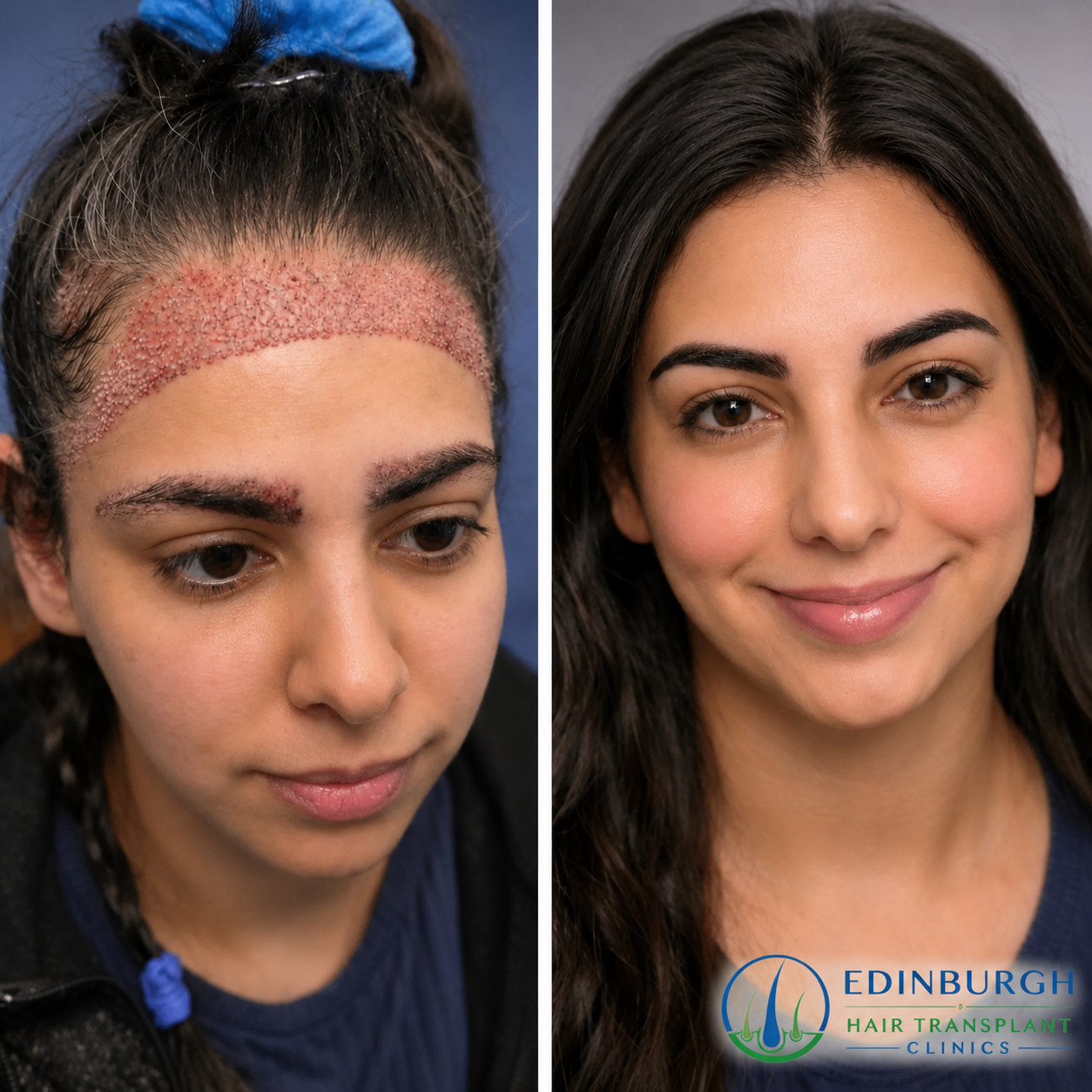
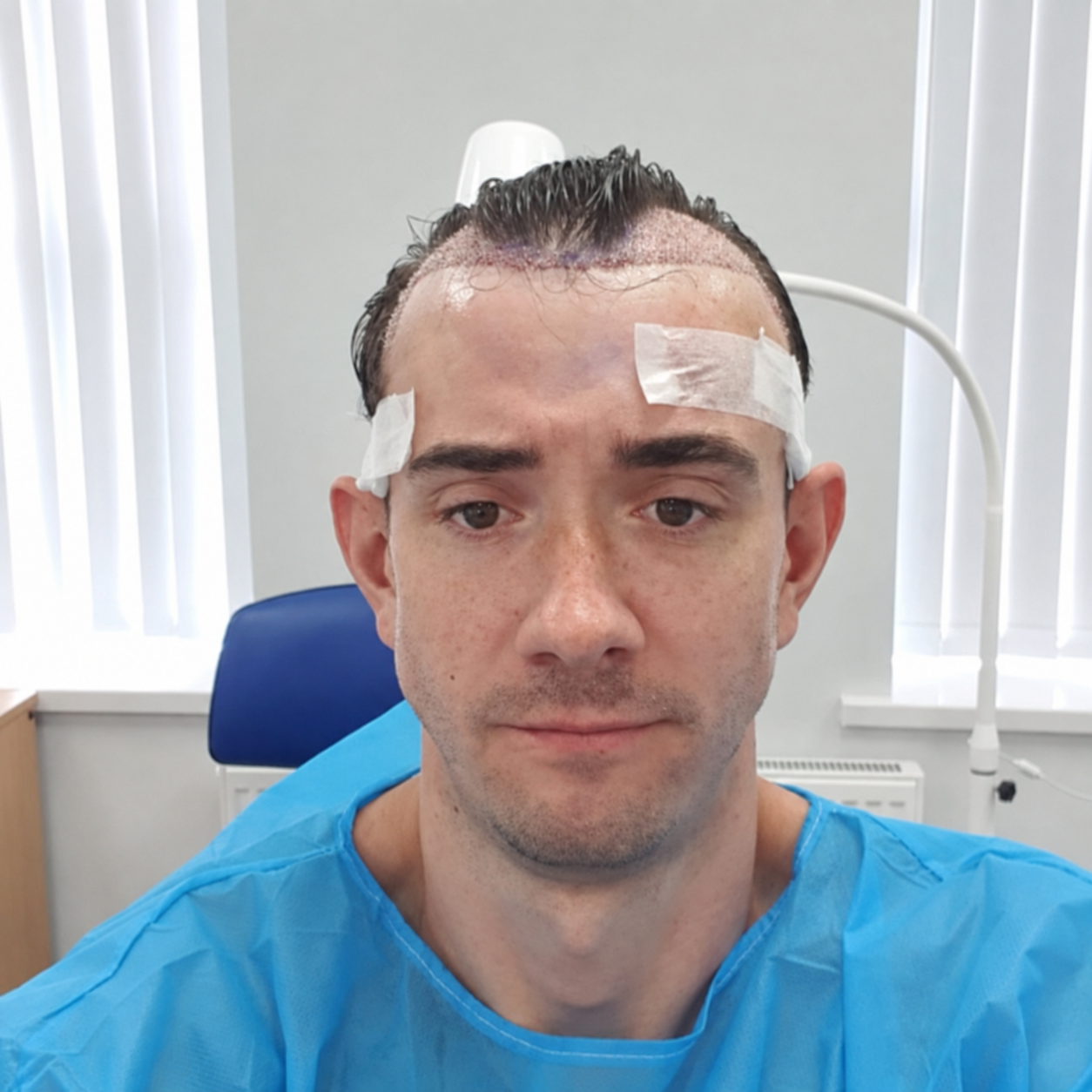
The first day is primarily about protecting the work that has just been carried out. The recipient area can look red, dotted and visibly surgical. Small crusts begin to develop around the implanted hairs and the donor area can feel tender or tight.
Avoid repeatedly touching the recipient area to check whether the grafts are secure. Keep your hands away from the scalp unless your postoperative instructions specifically require you to do something. Particular care is needed while changing clothing, getting into vehicles and moving around the house because accidental contact with a door frame, cupboard or tight neckline is entirely avoidable.
Rest after treatment and take only medication that has been approved or prescribed for you. A long transplant session can be tiring even when the procedure itself has been performed under local anaesthetic.
Sleeping After Surgery
Your sleeping position should protect the treated area from rubbing against bedding. Some patients are advised to sleep with the upper body elevated during the first nights, particularly where postoperative swelling is expected.
The exact position depends on the area treated. Someone with frontal hairline grafts does not necessarily need the same arrangement as somebody with extensive crown work. Follow the position given for your procedure rather than treating a fixed angle or particular pillow as compulsory for every patient.
Days 2–5
Over the next few days the recipient sites begin to settle and the donor wounds progress through normal early healing. Mild tenderness, itching, tightness, redness and swelling can occur. The important point is that the overall direction should gradually be towards recovery.
Forehead swelling can occasionally move lower towards the eye area. Do not aggressively massage the recipient region or apply products that have not been approved. If swelling becomes severe, rapidly worsens or is accompanied by significant pain or other concerning symptoms, contact the clinical team.
Washing Your Hair After a Hair Transplant
The first postoperative washes are important because the scalp needs to be cleaned without treating newly implanted grafts like established hair. Your surgical team should tell you when washing begins and exactly how they want it performed.
Once washing has started, the principle is gentle contact. Avoid directing powerful shower pressure straight at the recipient area during early recovery. Use the shampoo or cleanser recommended to you and use water at a comfortable temperature rather than exposing healing skin to excessive heat.
Do not dig fingernails into the scalp or scrub the recipient area. Likewise, avoid rubbing fresh grafts with a towel. Follow the drying method supplied by the clinic until the recipient sites have had enough time to settle.
What Happens to the Scabs?
Small crusts commonly form around transplanted hairs. They are part of the early appearance of the recipient area and should not be picked off simply because they are visible.
As the approved washing routine progresses, crusting usually softens and gradually clears. Trying to make the scalp look normal several days sooner is not worth aggressively scraping the area.
Residual redness can remain after most of the crusts have disappeared. How obvious this looks varies with skin tone, treatment size and individual healing. The scalp does not have to look identical to another patient's scalp on the same postoperative day.
Looking After the Donor Area
After an FUE procedure, the donor region contains many small extraction sites. These can become itchy as they heal, but scratching and picking simply irritate skin that is already recovering.
FUT donor aftercare is different because there is a linear closure rather than dispersed extraction sites. Patients need to follow the wound-care instructions provided for the incision and any sutures or staples.
For a fuller explanation of extraction patterns, donor density, healing and scarring, read our hair transplant donor area guide .
Hair Products During Early Recovery
Hair wax, gels, fibres, concealers, strong styling sprays, bleach and hair dye have no useful role during the immediate wound-healing stage. Allow the scalp to recover first and introduce normal grooming products once the clinical team has confirmed that the skin is ready.
From Early Healing to New Hair Growth
Days 6–14
During the second part of the first two weeks, the scalp generally begins to look less obviously surgical. Washing becomes more established, crusting gradually clears and FUE donor extraction points become less noticeable as the surrounding hair starts to grow.
This does not mean every restriction disappears as soon as the scabs have gone. The skin has still recently undergone surgery, so returning to haircuts, exercise, styling products and other scalp treatments should follow your postoperative plan.
Weeks 2–8: Shedding
The next phase often causes more anxiety than the operation itself. The visible transplanted hairs can begin to fall out several weeks after surgery. Patients naturally see hair disappearing and worry that the transplanted follicles have been lost.
In many cases, it is the visible hair shaft that is being shed while the transplanted follicle remains within the scalp. The area can consequently look thinner than it did shortly after the procedure.
Some non-transplanted native hair near the surgical area can also temporarily shed. This is why the result should never be judged during the early shedding stage. Read our hair transplant shedding and shock loss guide for more detail.
Months 3–6
Early new hairs can begin emerging over the following months. Growth is not necessarily perfectly even. One section may become visible before another and the first hairs can initially appear finer than mature surrounding hair.
Density develops progressively rather than appearing overnight. Monthly photographs taken in similar lighting and from the same angles give a much more useful comparison than repeatedly checking the scalp every day.
Months 6–9
During the middle of the first year, the shape of the result is usually easier to appreciate. More transplanted hairs have emerged and earlier growth continues gaining length and calibre.
A restored frontal area begins to frame the face more clearly, while crown improvement becomes increasingly visible as hairs develop through the whorl.
Months 9–12 and Beyond
Later in the first year the transplant becomes much more representative of the eventual result. Hair can continue to thicken and mature after this point, and some areas—particularly crown work—can take longer to show their fuller development.
Our hair transplant growth timeline explains the stages from operation day through later maturation in greater detail.
What Should You Avoid After a Hair Transplant?
Strenuous Exercise
Heavy exercise should be paused during early recovery. Strenuous training increases sweating and creates more opportunities for accidental contact, rubbing and irritation while the donor and recipient areas are healing.
Contact sports require particular caution because a direct impact to the scalp is an obvious risk. Return to training progressively once you have been cleared to do so rather than going straight from postoperative rest into a full session.
Swimming, Saunas and Steam Rooms
Swimming pools, hot tubs, saunas and steam rooms should not be part of the early recovery period. Pools expose healing wounds to water before the skin has fully settled, while saunas and steam rooms create heat and heavy sweating.
Wait until the donor and recipient sites have healed sufficiently and the clinic has confirmed that returning to these activities is appropriate.
Sun and Excessive Heat
A recently operated scalp should not be deliberately exposed to prolonged direct sunlight. Follow the instructions you have been given about sun protection and when headwear can safely be introduced.
This does not mean immediately pulling a tight cap over new grafts. Any hat used during early recovery needs to avoid friction and pressure against the transplanted region.
Hair Dryers and Styling Products
Avoid directing intense heat at freshly treated skin. Likewise, wax, gel, styling spray, hair fibres and cosmetic concealers should wait until the scalp is sufficiently healed.
Hair dye, bleach and chemical treatments also need to be delayed. The recipient area has recently contained hundreds or thousands of small surgical sites; it does not need additional chemical irritation while those sites are settling.
Returning to Work
The appropriate time away from work depends partly on what your job involves. Somebody working from a desk has very different requirements from somebody carrying out heavy manual work, wearing tight protective headgear or working around heat and dust.
Appearance also matters. Redness, crusting and a short donor haircut can remain noticeable during the first days. Patients who want the procedure to remain private may choose more time away from work than their physical recovery alone would require.
Wearing a Hat
Do not use tight headwear to conceal fresh grafts unless the clinic has confirmed that it is safe. When headwear is permitted, it should not drag over the recipient area as it is put on or removed.
Your First Haircut
Clippers, razors and combs create direct contact with the scalp. The donor and recipient areas may therefore have different timings for the first haircut. Ask the clinic before allowing a barber to use clippers directly over healing skin.
Medication and Treatment After a Hair Transplant
Postoperative medication should be based on what has actually been prescribed or approved for you. Do not add medicines because another transplant patient received them, and do not assume that every clinic uses an identical drug protocol.
Pain Relief
Some soreness, tightness or discomfort can occur, particularly around the donor region. Use the pain relief recommended by the surgical team and follow the supplied dosage instructions.
Antibiotics
Antibiotics should not be advertised as though every hair transplant patient automatically requires them. Where the treating clinician considers antibiotics appropriate, they should be prescribed specifically for that patient with clear instructions on how they are to be taken.
If you have been prescribed antibiotics, follow the directions supplied to you. Contact the clinic if you have questions about the course or suspect a reaction to medication.
Finasteride After a Hair Transplant
Finasteride is not simply part of a standard postoperative package. It is a prescription treatment used for appropriate patients with male-pattern hair loss and is mainly relevant to the continuing loss of susceptible native hair.
That can be important after a transplant because surgery moves follicles into a thinning area but does not switch off the underlying pattern of hair loss elsewhere. Whether finasteride is appropriate requires an individual discussion of medical history, expected benefit and possible adverse effects.
Minoxidil
Minoxidil may also form part of a longer-term hair-loss plan for some patients, but the timing of starting or restarting it around surgery should follow clinical advice. Applying it to a scalp that has not yet healed simply because it was part of a previous routine is not sensible.
Our medication for hair loss guide explains medical options separately from surgical aftercare.
What About PRP?
PRP treatment is sometimes discussed as an additional treatment in hair-loss management. It should not be presented as a guarantee that transplanted follicles will suddenly grow faster.
Hair transplantation has its own biological growth cycle over many months. PRP and immediate surgical aftercare are separate subjects. The basic job after surgery remains protecting the grafts and allowing the donor and recipient areas to heal correctly.
Travel and Follow-Up After Your Hair Transplant
Can You Drive Home?
Do not make your travel arrangements on the assumption that you will definitely drive yourself immediately after surgery. Hair transplant procedures can last for several hours, and the anaesthetic, any additional medication used and simple postoperative fatigue all need to be considered.
Arrange your journey before the procedure and follow the clinical team's advice about driving. If medication has been given that affects alertness or driving ability, those restrictions must be followed.
Flying After Surgery
Patients travelling to Edinburgh should discuss flights before treatment rather than booking an inflexible departure immediately after the operation. Early follow-up, swelling and access to the clinic should all be considered.
A short domestic journey and a long international flight are not identical. The sensible plan is one that allows appropriate recovery and review rather than assuming every patient can leave immediately.
Why Follow-Up Matters
Good aftercare includes access to the clinical team. Patients should know how to contact the clinic if something changes unexpectedly and should understand whether a postoperative review is required.
This is particularly important because photographs sent from home can be useful, but they do not replace proper clinical assessment when there is genuine concern about infection, wound healing, bleeding or another complication.
Follow-up also provides an opportunity to review donor healing, shedding, growth progression and longer-term hair-loss planning rather than focusing only on the first week after surgery.
Does Aftercare Differ Between Hair Transplant Methods?
The recipient-area principles are similar whatever implantation method has been used: protect freshly placed grafts, follow the approved washing routine and avoid unnecessary trauma while the skin heals. The main practical differences often involve the donor area and the location of the transplanted grafts.
FUE Aftercare
Following FUE hair transplantation , individual follicular units have been removed from the donor region. This produces many small extraction sites rather than one long incision.
Those sites need time to close and settle. Avoid picking the donor area simply because the tiny crusts are visible. Although FUE avoids a strip incision, it is still surgery and should not be described as scar-free or recovery-free.
DHI Aftercare
DHI hair transplantation generally uses individual donor harvesting, commonly using an FUE approach, followed by graft placement with an implanter device.
That means DHI does not create an entirely different biological recovery process. The donor extraction sites still need to heal and the implanted grafts still need the same basic protection from rubbing, scratching and unnecessary pressure.
FUT Aftercare
With FUT , a strip of donor scalp is removed and the wound is closed. Recipient grafts still require protection, but the donor region needs specific care because a linear surgical wound is healing.
Follow the instructions supplied for the closure and for any sutures or staples. Heavy activity that places avoidable tension across the healing donor region should not be resumed before the surgeon has advised that it is appropriate.
Hairline Transplant Aftercare
Hairline grafts are exposed at the front of the scalp and can easily be knocked when dressing, washing the face or pulling clothing over the head. Extra awareness during the first few days helps prevent accidental contact.
Crown Transplant Aftercare
With a crown hair transplant, sleeping position can become particularly relevant because the recipient area sits towards the back of the scalp. Follow the postoperative sleeping advice given for the exact area treated.

When Should You Contact the Clinic?
Some redness, tenderness, itching, crusting and swelling can occur as part of normal early recovery. What matters is whether symptoms are settling or moving in the wrong direction.
Do not wait for a routine review if you develop a significant or worsening problem. Contact the clinic if you experience:
- heavy or persistent bleeding;
- pain that is becoming substantially worse rather than improving;
- spreading redness or increasing heat around a wound;
- pus, unusual discharge or an unpleasant smell;
- fever or feeling systemically unwell;
- rapidly increasing or severe swelling;
- opening of the donor wound;
- significant trauma to the transplanted area;
- or any sudden postoperative change that genuinely concerns you.
Symptoms suggesting a serious allergic reaction, including difficulty breathing, require urgent medical attention rather than waiting for an online response.
What If You Knock the Grafts?
Accidental contact can happen. If you knock the recipient area during early recovery, do not begin moving hairs around with your fingers to inspect them. If there is substantial bleeding, obvious disruption or you are uncertain about what has happened, contact the clinic and explain the incident.
Do Not Diagnose Every Change From Photographs Online
Pictures can be useful for showing the clinical team what you are seeing, but recovery cannot always be assessed accurately from a single photograph. Worsening symptoms deserve proper clinical attention rather than comparison with photographs posted by strangers at the same postoperative stage.
Long-Term Changes Are Different From Complications
Shedding several weeks after treatment and slow early growth several months later are very different from an acute wound problem. Understanding the normal growth cycle prevents the predictable shedding stage from being confused with a surgical complication.
Hair Transplant Patient Results
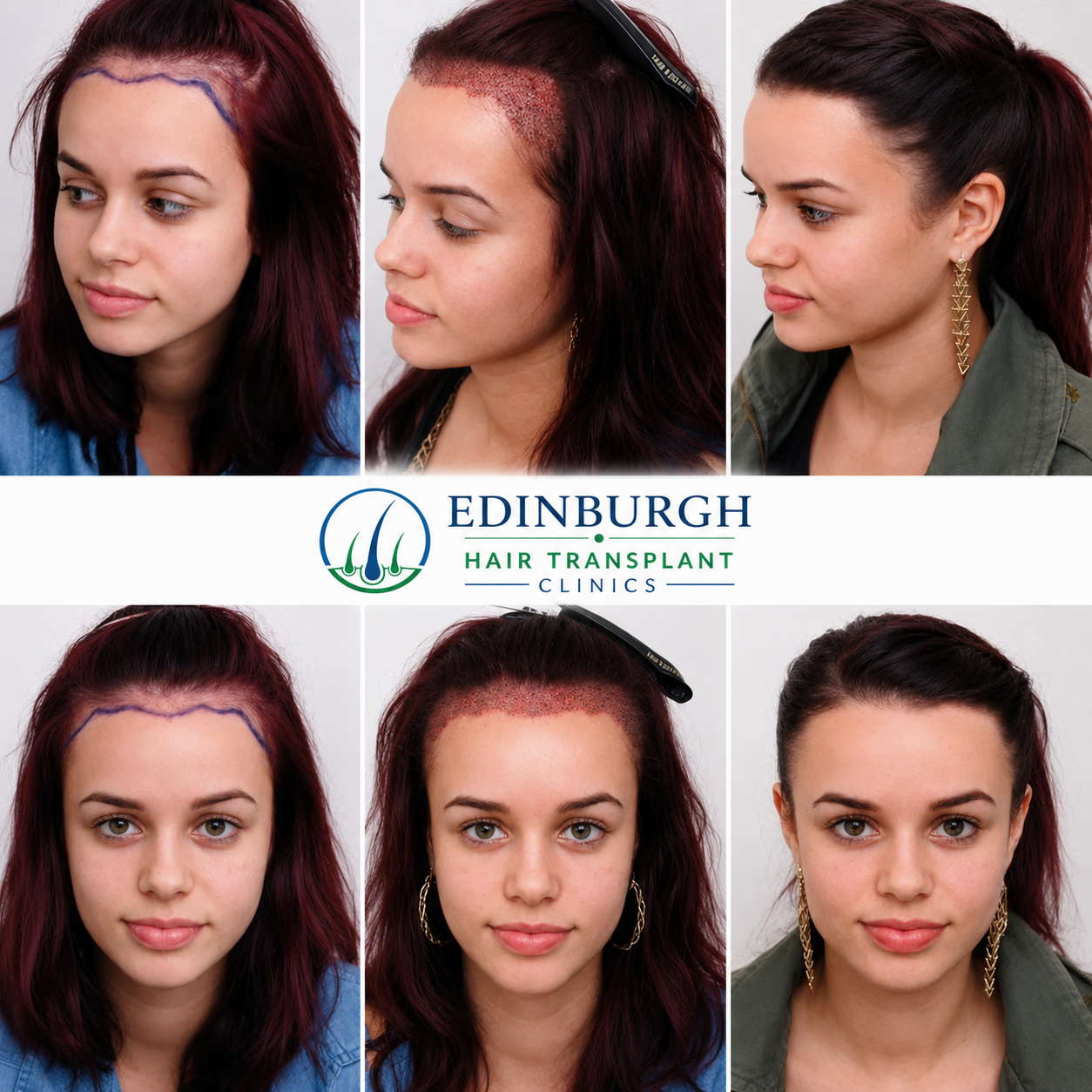
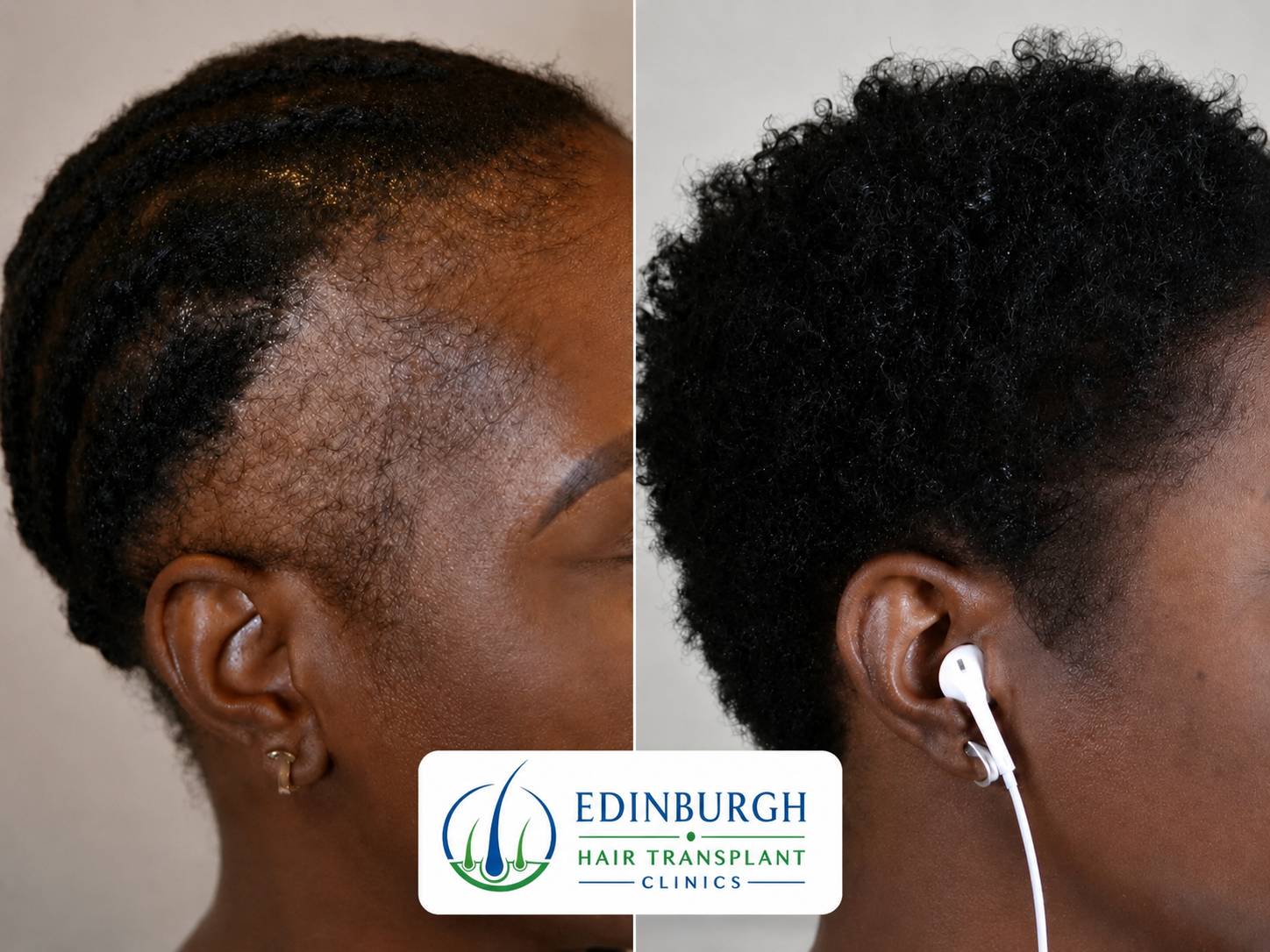
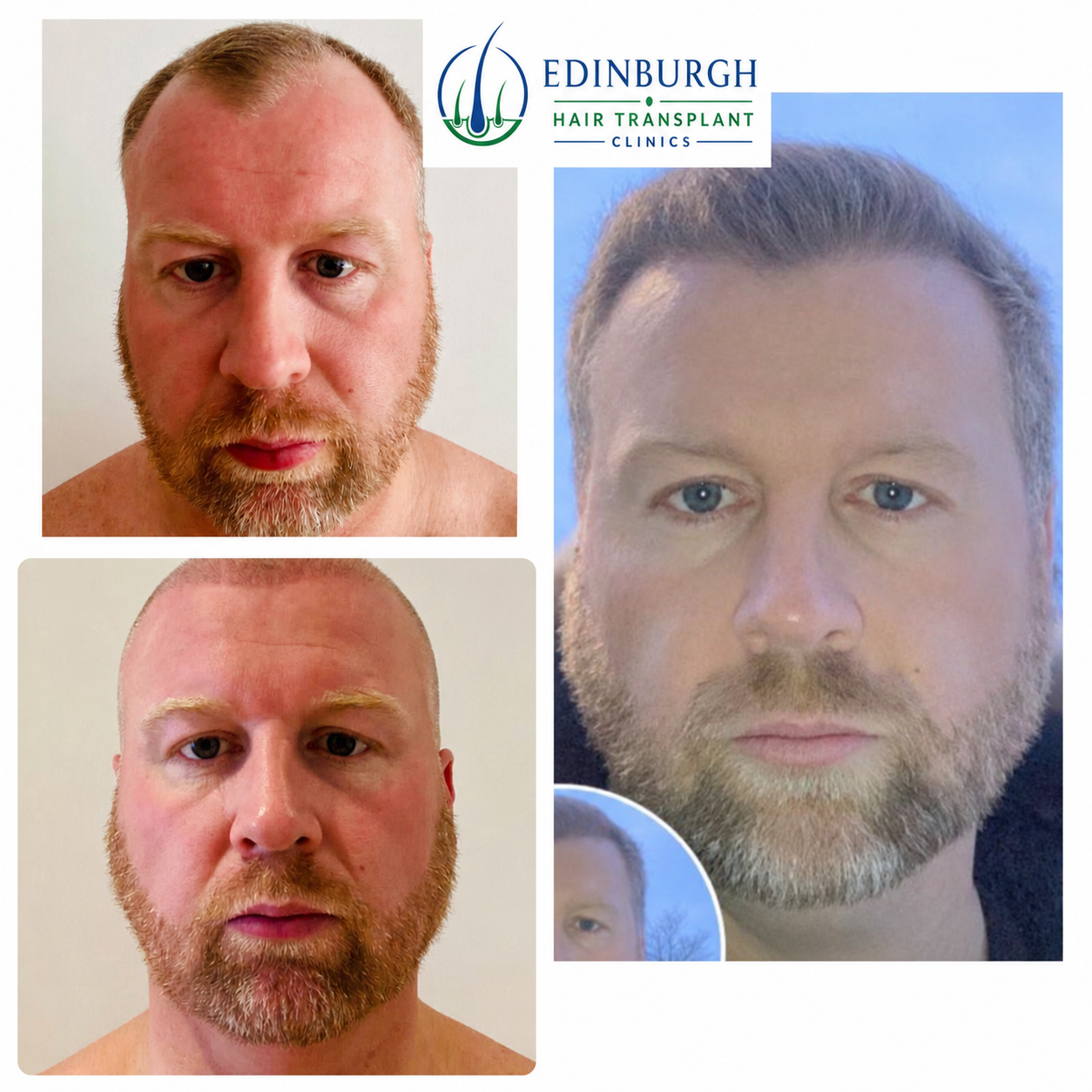
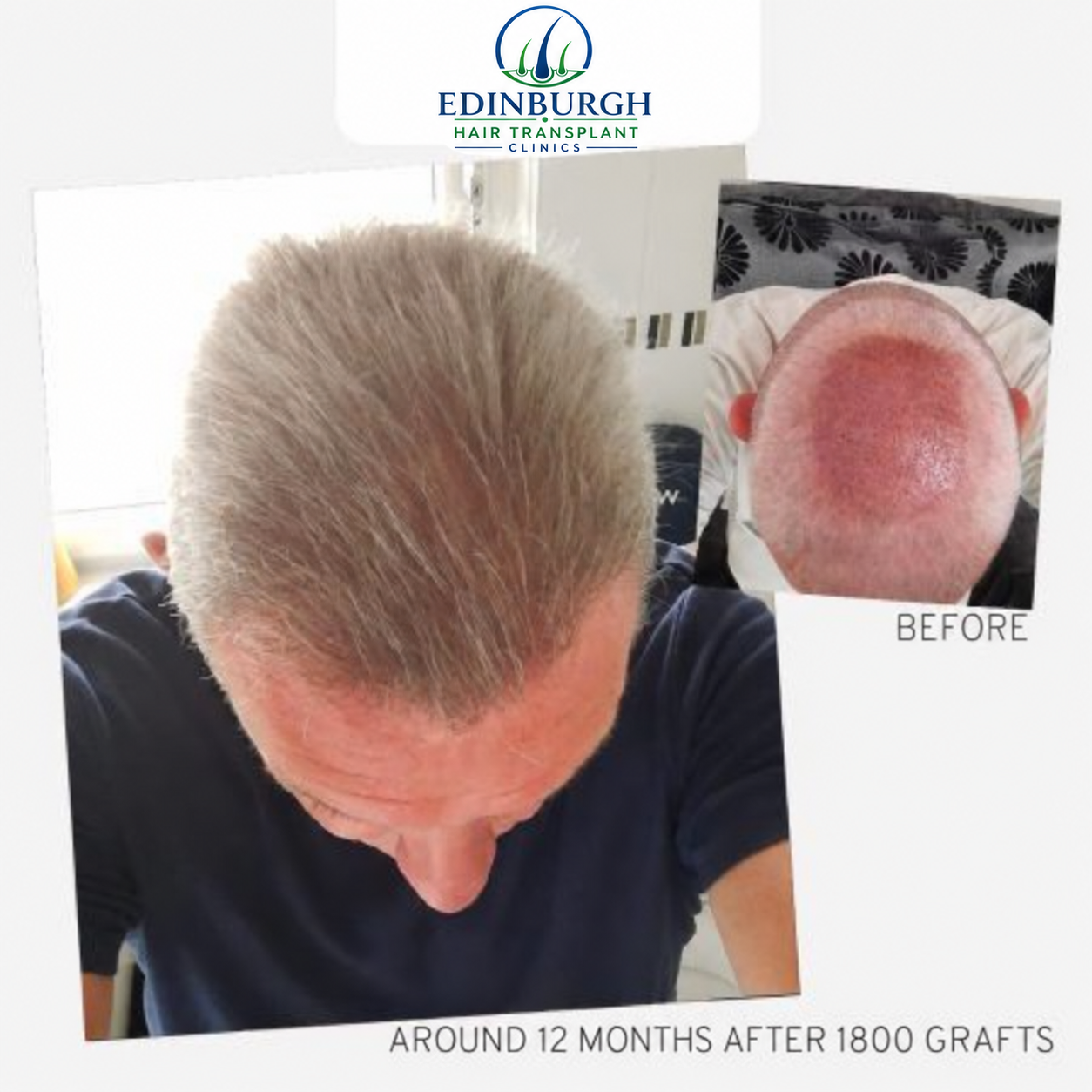
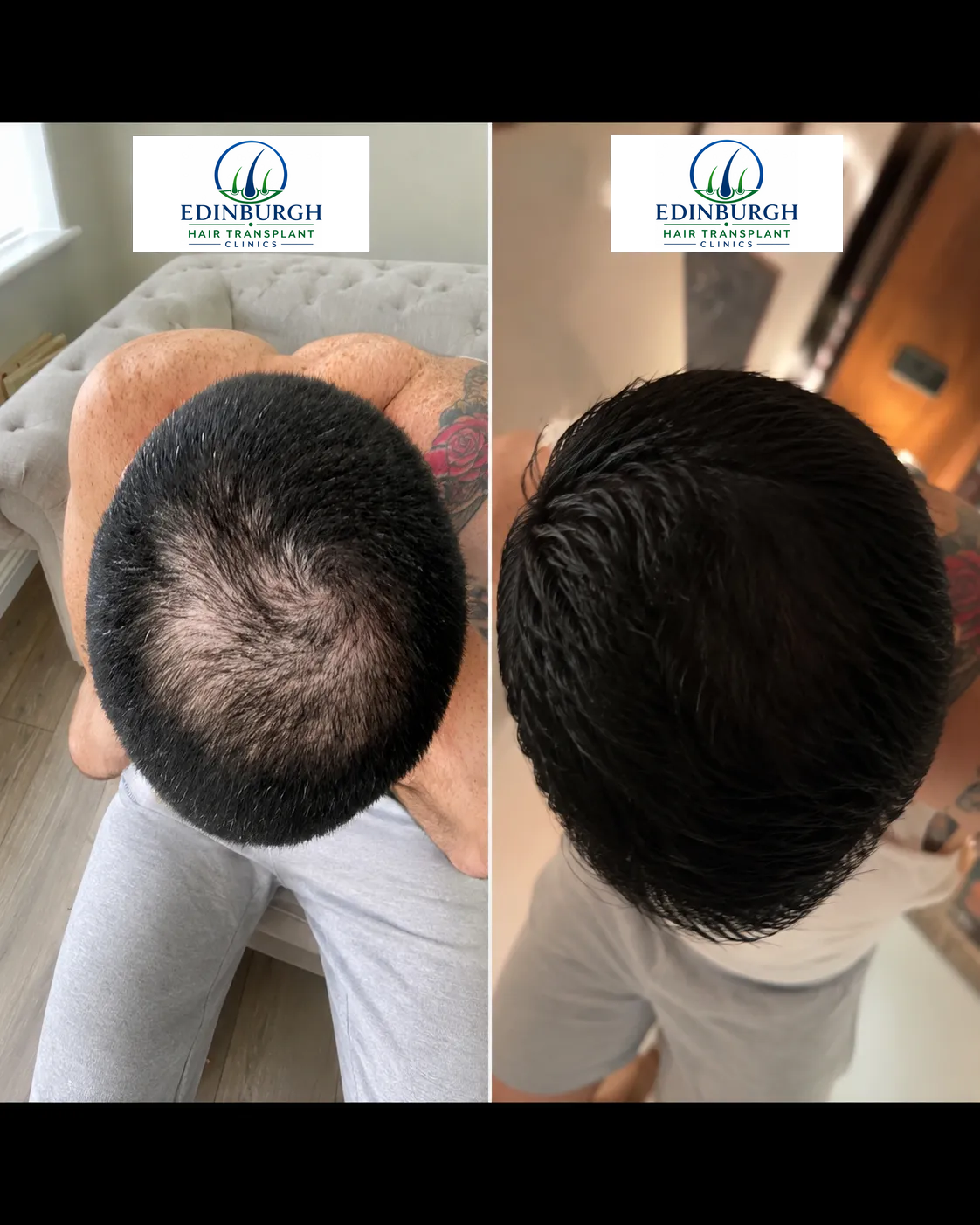
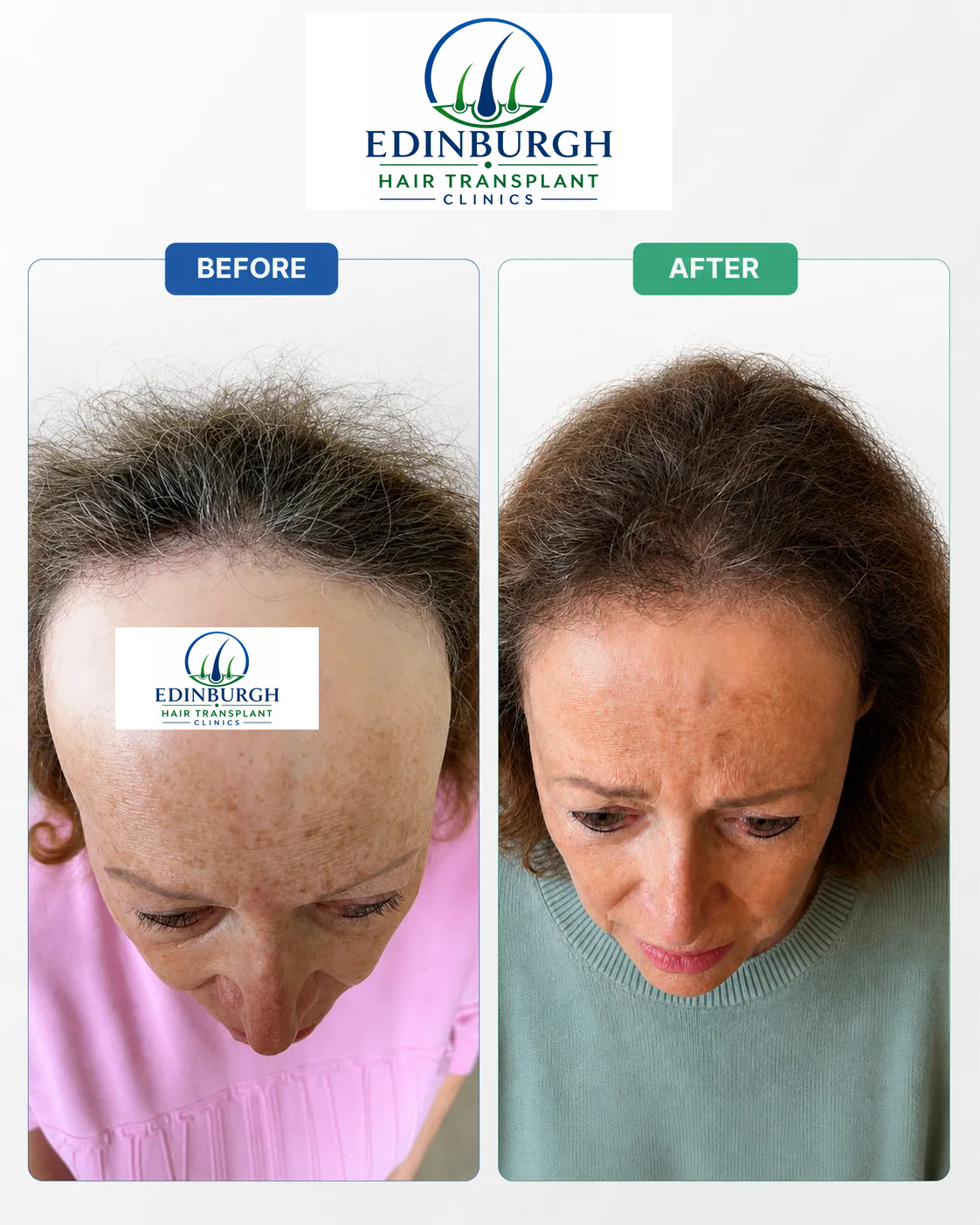
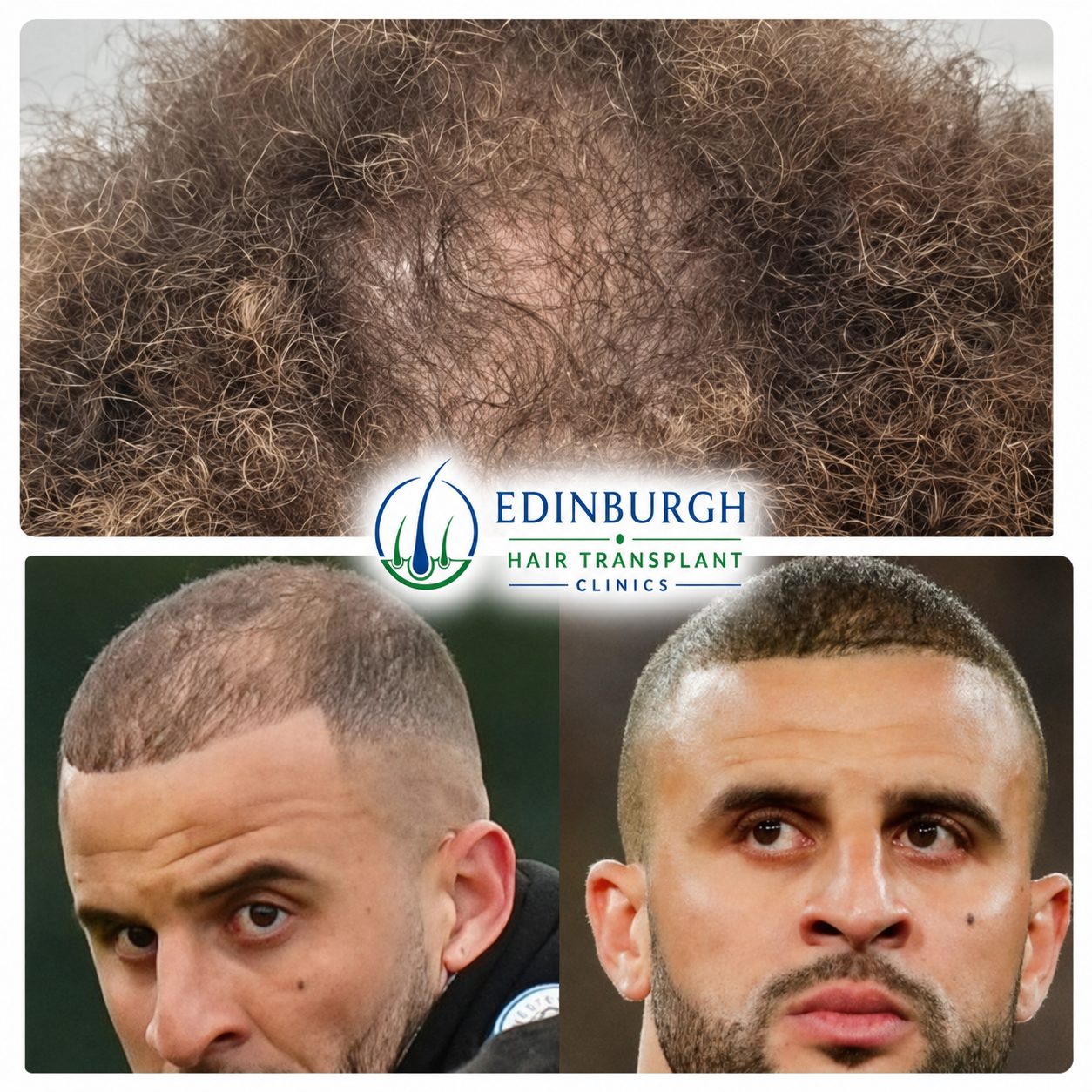
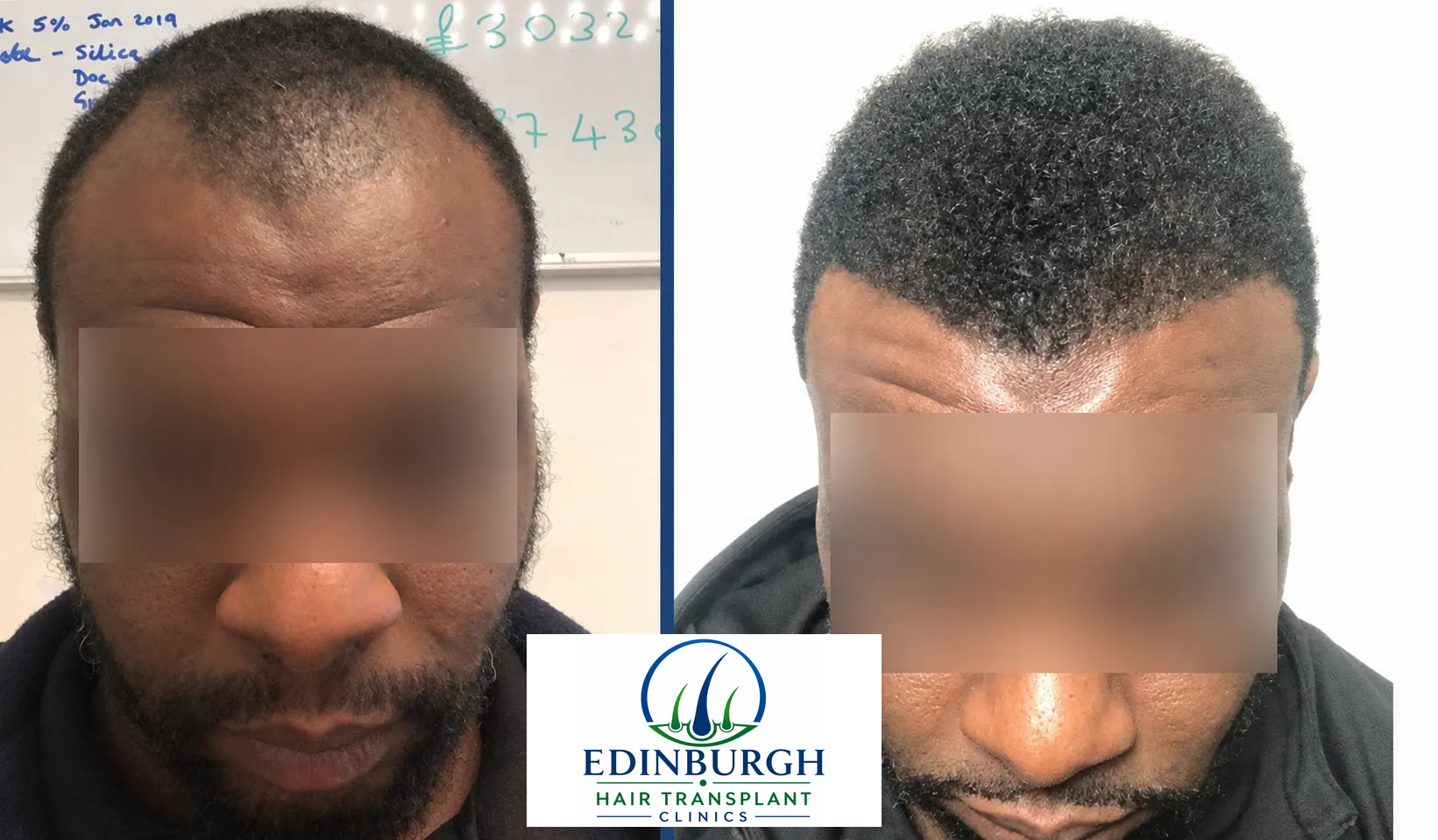
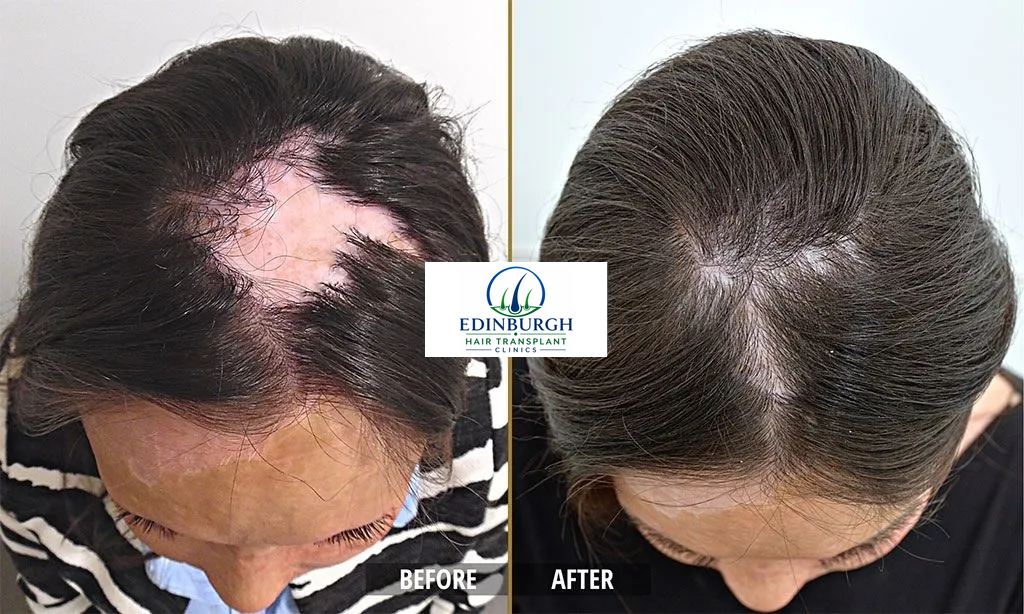
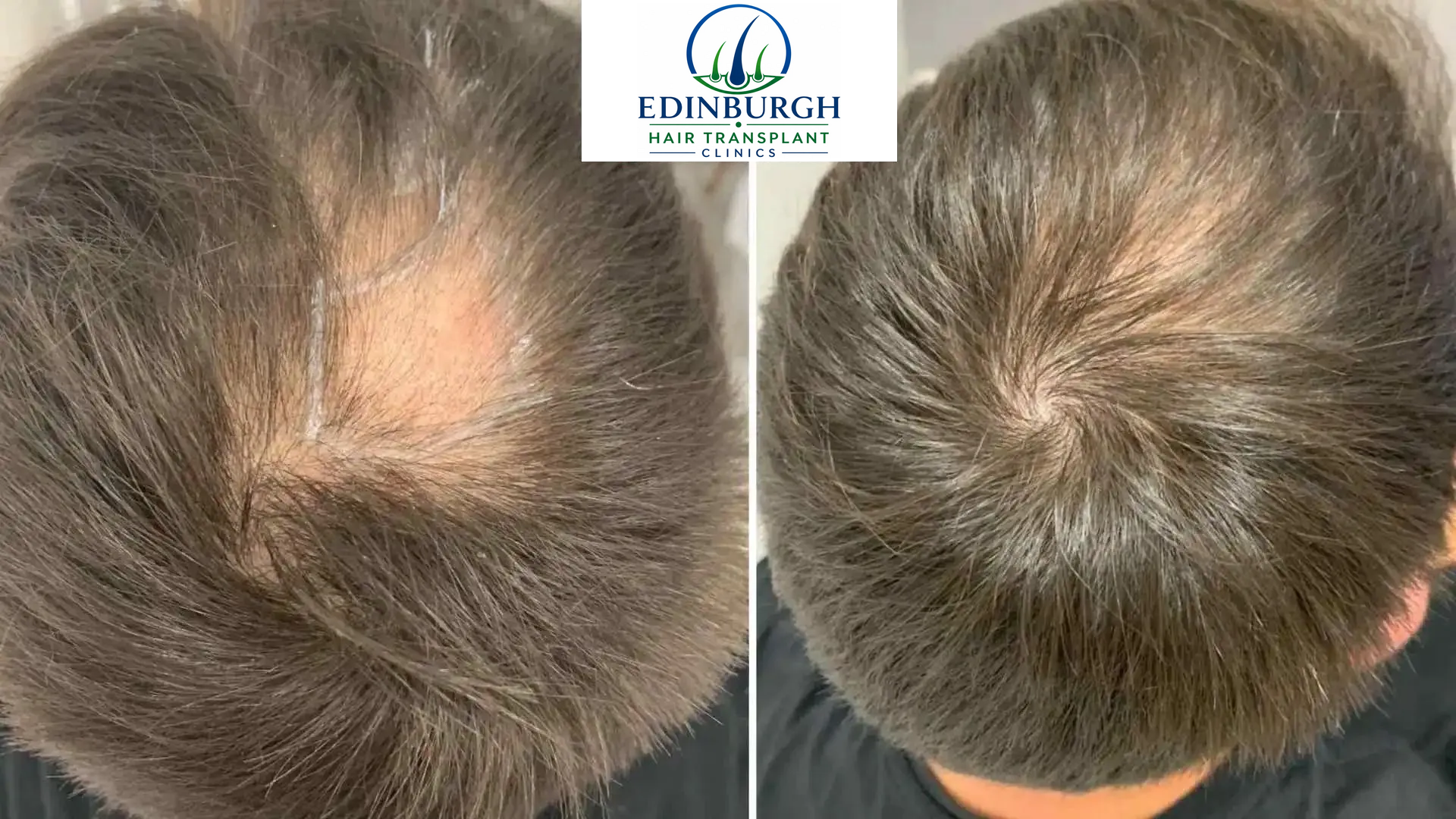
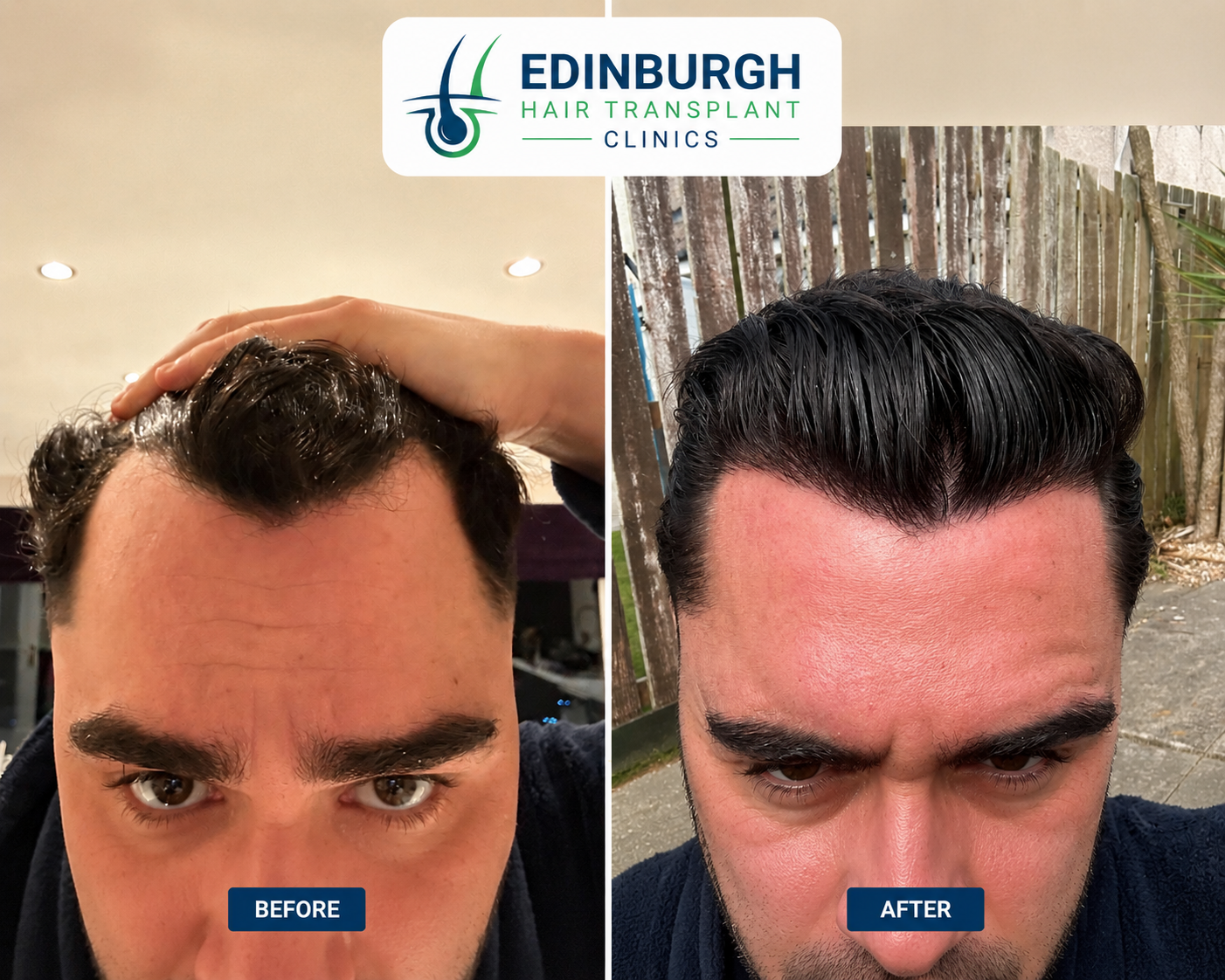
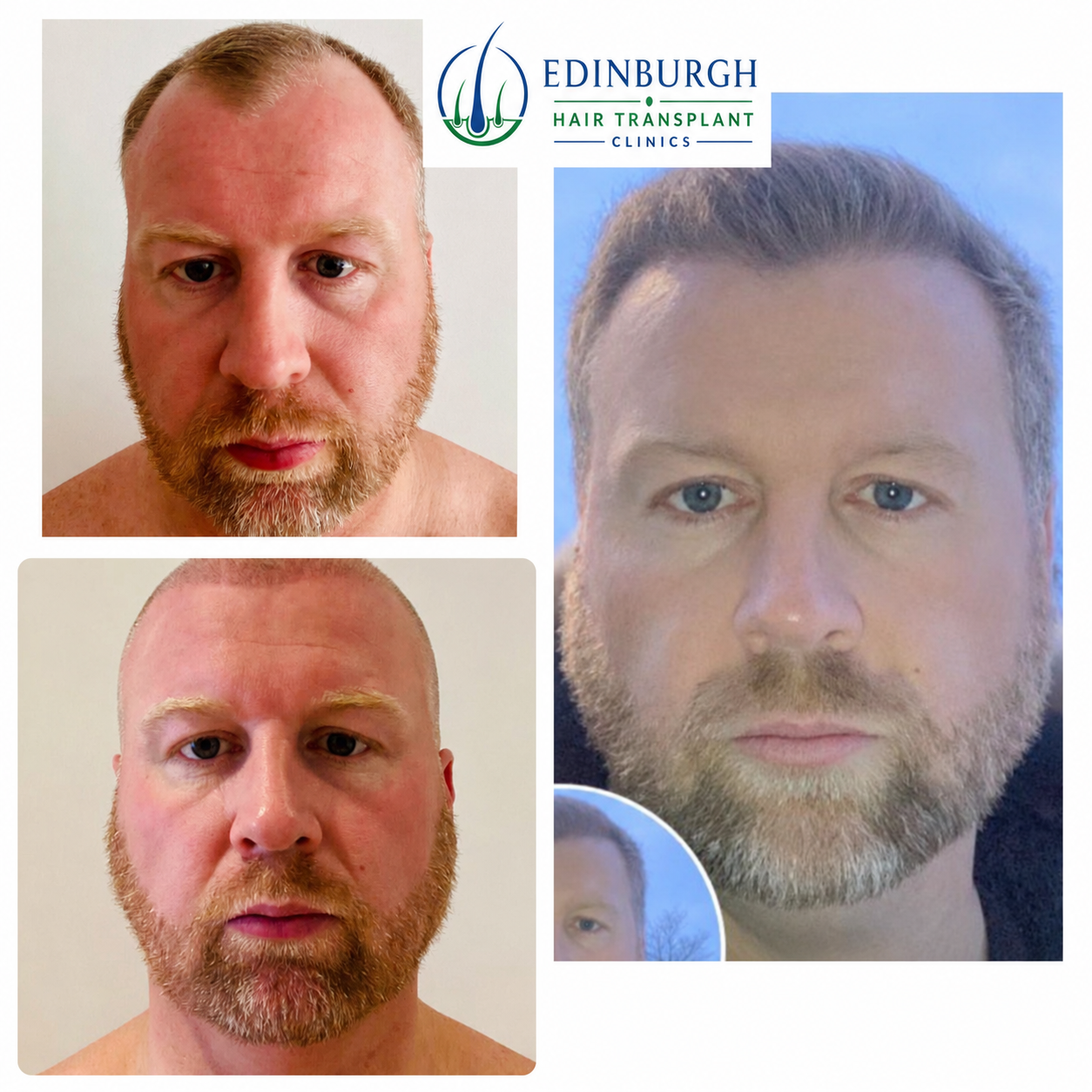
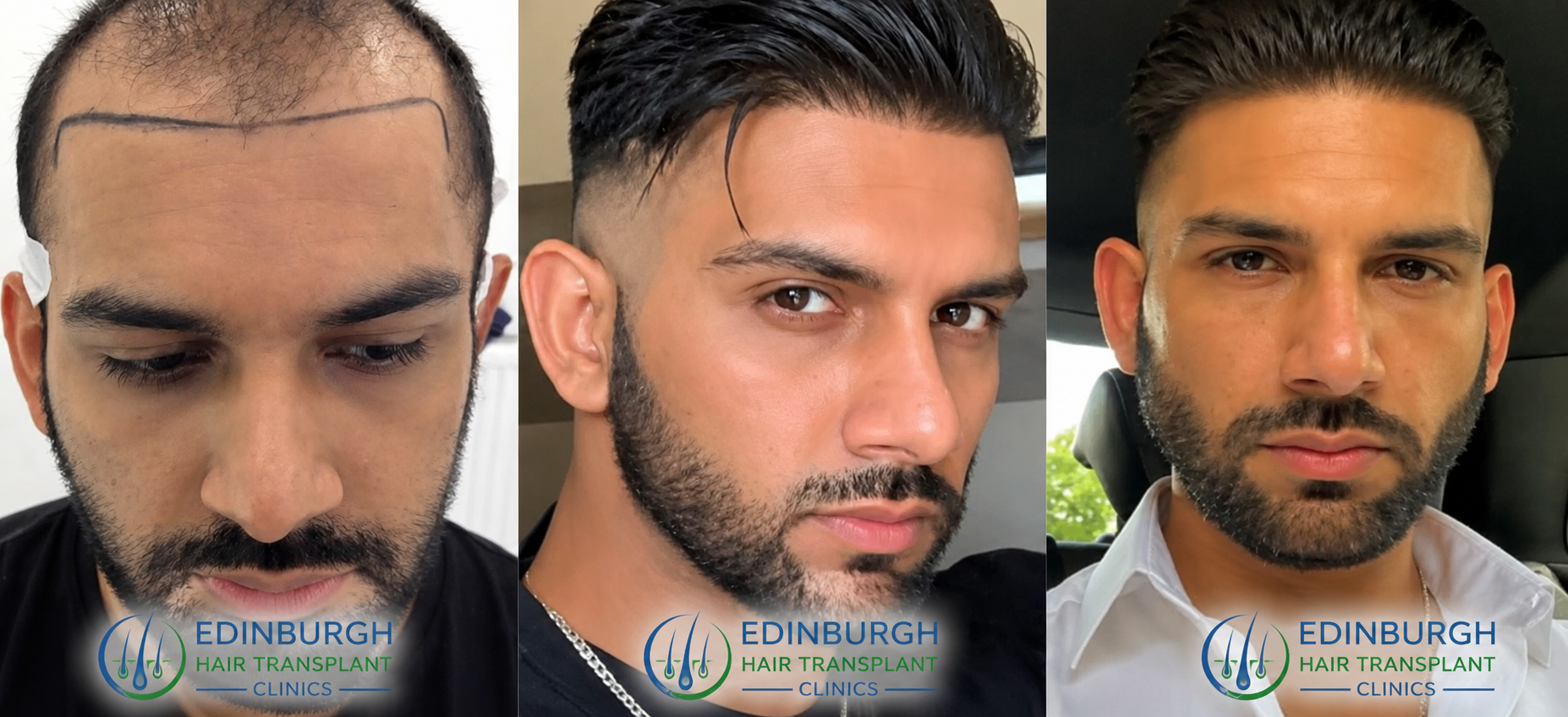
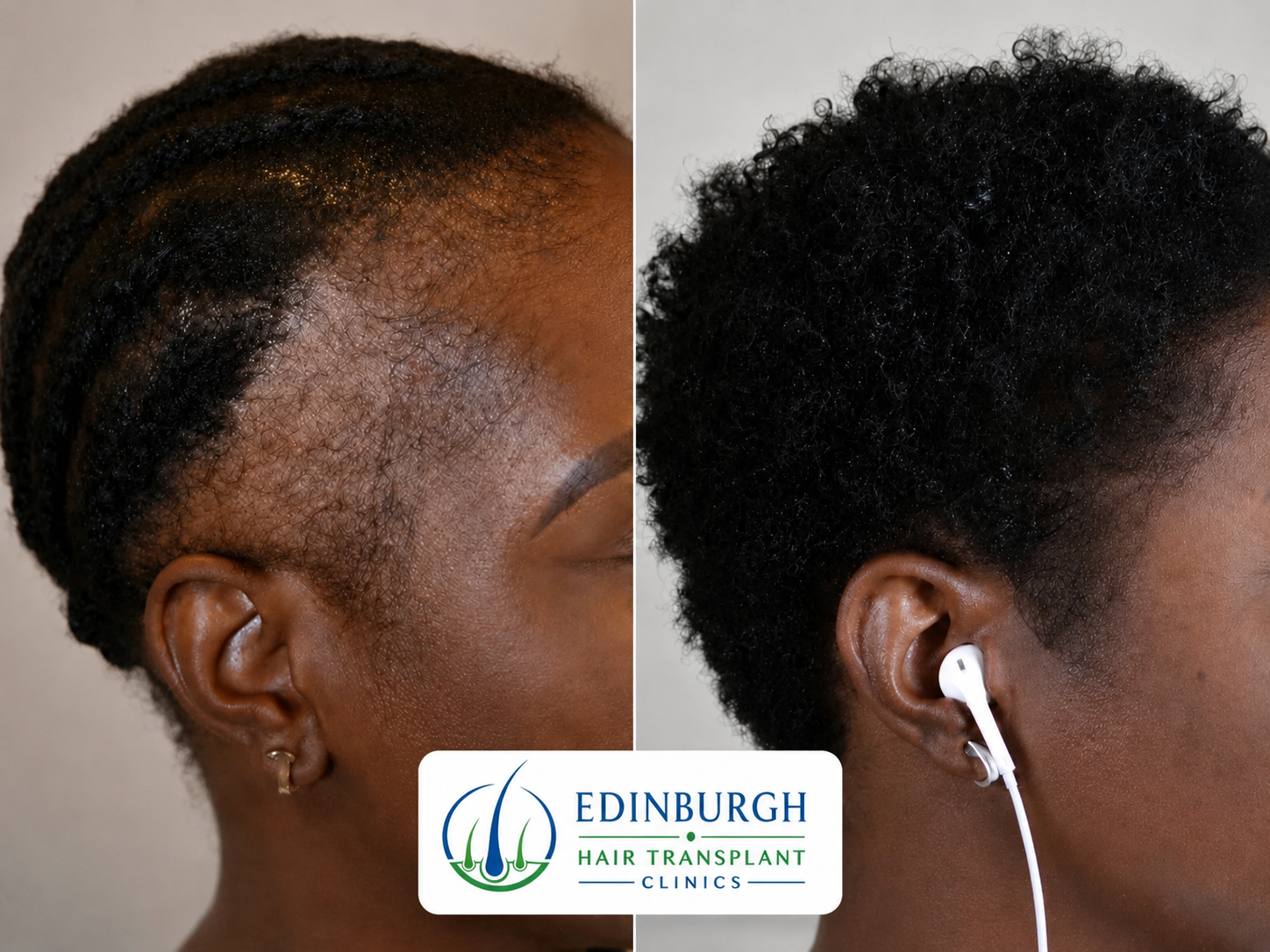
Recovery photographs make much more sense when they are viewed alongside later results. The appearance immediately after surgery, the shedding stage and the mature result are different parts of the same process. These are patient images from Edinburgh Hair Transplant Clinics. More examples are available in our before and after gallery.


View More Patient Results
Frequently Asked Questions
When can I wash my hair after a hair transplant?
Follow the washing instructions provided by your surgical team. Washing normally begins during early recovery, but the exact starting point and technique can vary. Avoid aggressive rubbing, scratching and strong shower pressure while the recipient area is still healing.
How long does hair transplant aftercare take?
The most intensive part of aftercare is during the first days and weeks. The donor and recipient areas then continue to settle while shedding and new growth take place over the following months.
Can I touch the transplanted area?
Unnecessary touching, rubbing and scratching should be avoided during early recovery. When washing begins, handle the recipient area according to the instructions supplied after your procedure.
Is swelling normal after a hair transplant?
Some swelling can occur during the first few days, particularly around the forehead. Contact the clinic if swelling becomes severe, rapidly worsens or is accompanied by significant pain or other concerning symptoms.
When can I go back to the gym?
Strenuous exercise and heavy sweating should be avoided during early healing. Your return should be gradual and based on the procedure performed and the advice given by your surgical team.
When can I wear a hat?
Avoid tight or abrasive headwear over fresh grafts. If you want to wear a hat after surgery, ask when it is safe and use a style that does not rub or place pressure on the transplanted area.
Should I remove the scabs myself?
Do not pick at postoperative crusts. They should soften and progressively clear as the approved washing routine continues. Picking them early can unnecessarily irritate healing skin.
Why is my transplanted hair shedding?
Shedding of the visible transplanted hairs several weeks after surgery is common. It does not automatically mean the follicles have been lost. New growth develops later as the transplanted follicles move through their normal growth cycle.
When should new transplanted hair start growing?
Early new growth can begin after several months. Density then develops progressively throughout the first year, with some areas continuing to mature beyond twelve months.
Do all patients need antibiotics?
No. Antibiotics should be used when they have been prescribed for the individual patient. If you have received a prescription, follow the instructions provided by the clinician responsible for your treatment.
Should I take finasteride after my transplant?
Finasteride is not compulsory postoperative care. It may be discussed with appropriate patients as part of longer-term management of male-pattern hair loss. Suitability depends on the individual patient, expected benefit and potential adverse effects.
Can PRP make my transplant grow faster?
PRP can be considered separately as an adjunctive treatment, but it should not be presented as a guarantee of faster transplant growth. Transplanted follicles naturally develop over a period of months.
Can I drive home after my hair transplant?
Do not assume that driving immediately after treatment will be suitable. Procedure length, medication, anaesthetic and how you feel afterwards all need to be considered. Arrange transport in advance and follow the advice provided on the day.
When should I contact the clinic?
Contact the clinical team if you develop heavy bleeding, worsening pain, spreading redness, increasing heat, pus, fever, severe swelling, wound opening or significant trauma to the transplanted area. Serious allergic symptoms or breathing difficulty require urgent medical attention.
Aftercare Beyond the First Few Weeks
Once the scalp has healed, attention gradually moves away from protecting fresh grafts and towards monitoring growth. The transplanted hairs commonly pass through a shedding stage before new hair becomes visible, so the appearance of the scalp during the first few months should not be mistaken for the final result. Our hair transplant shedding guide explains this stage in more detail.
The donor area also continues changing after the obvious signs of surgery have disappeared. FUE extraction points settle as the surrounding hair grows, while FUT patients have a linear donor scar that continues to mature. You can read more about this in our hair transplant donor area guide .
New transplanted hair develops gradually rather than appearing at once. Early growth can begin after several months and continue to improve through the remainder of the first year. Our hair transplant timeline shows what patients can typically expect as healing gives way to growth and later maturation.
Planning Your Hair Transplant Recovery
Recovery should be discussed before surgery so that you know what the first days will involve, how the scalp should be washed, when you can return to work and exercise, and what changes to expect as the transplanted hair moves through shedding and regrowth.
Edinburgh Hair Transplant Clinics is based at 83 Princes St, Edinburgh, EH2 2ER. To arrange a consultation or discuss hair transplant treatment, call 0131 639 0004.