Hair transplant consultation: an Edinburgh patient guide
Use this guide to prepare for your consultation: establish suitability, compare the proposed methods and ask clear questions about costs, risks, surgery location and follow-up.




Considering a hair transplant in Edinburgh involves more than comparing prices or choosing the clinic with the strongest advertising.
A responsible decision should consider the cause and progression of your hair loss, the limitations of your donor area, who performs the surgical stages, realistic graft requirements, recovery support and how the result may age if native hair continues thinning.
Diagnosis first
Not every type of hair loss is suitable for surgery
Donor hair is finite
Grafts must be planned for current and future loss
Who may be suitable for a hair transplant?
Hair transplantation moves existing follicles from a donor area into an area requiring restoration. It does not create new follicles or prevent untreated native hair from continuing to thin.
Factors that may support treatment
- a diagnosable and reasonably predictable pattern of hair loss;
- sufficient donor density and suitable hair characteristics;
- realistic expectations about coverage and density;
- a proposed design that remains appropriate with age;
- understanding that further native hair loss may occur;
- willingness to follow recovery and aftercare guidance.
Reasons treatment may be delayed
- unexplained, rapid or diffuse hair shedding;
- active scalp inflammation or suspected scarring alopecia;
- an unstable or rapidly progressing hair-loss pattern;
- inadequate or previously overharvested donor supply;
- medical factors requiring investigation or stabilisation;
- requests for unrealistic density or an excessively low hairline.
Why diagnosis matters:
Pattern hair loss, alopecia areata, telogen effluvium,
traction-related loss and scarring alopecias do not
automatically require the same treatment. Surgery should not
replace diagnosis of an active hair-loss condition.
Your donor area determines what may be achievable
The scalp contains a limited supply of follicles suitable for transplantation. A responsible plan should balance the desired result against preserving donor coverage and future treatment options.
Donor density
The number and distribution of suitable follicular units influence how many grafts may be removed safely.
Hair calibre
Coarser hair may provide greater visual coverage than finer hair using the same number of grafts.
Hair characteristics
Colour contrast, curl, texture and the number of hairs in each follicular unit affect the appearance of density.
Future needs
Using too much donor hair during the first procedure can restrict options if native hair loss progresses.
FUE, DHI and FUT hair transplant techniques
The appropriate technique should suit the donor area, hairstyle, graft requirements, scarring preferences and long-term treatment plan.
| Technique | How donor hair is obtained | Main considerations | May be discussed for |
|---|---|---|---|
| FUE | Individual follicular units are removed with small punches from a suitable donor area. | Produces multiple small extraction marks rather than one linear donor scar. Extraction distribution is important. | Hairlines, crowns, temples, beards and selected specialist restoration. |
| DHI | Donor extraction is commonly FUE-based, with grafts placed using an implanter device. | DHI mainly describes the placement method and is not automatically superior to carefully planned FUE. | Selected recipient-area plans where implanter placement is considered suitable. |
| FUT | A strip of donor tissue is removed and divided into individual follicular-unit grafts. | Leaves a linear donor scar and requires wound, suture or staple care. | Selected patients requiring a different donor-management strategy. |
How much does a hair transplant cost in Edinburgh?
A meaningful quotation should follow an individual assessment rather than being based only on photographs, promotional packages or an advertised maximum graft number.
Treatment area
A small temple or hairline refinement requires a different plan from frontal, mid-scalp and crown restoration.
Graft requirements
Estimated graft numbers should reflect the area, existing hair, donor supply and realistic coverage.
Case complexity
Previous surgery, scarring, repair work and donor limitations can affect treatment planning.
Technique
FUE, DHI-style placement and FUT involve different donor management and treatment requirements.
Surgical responsibilities
Ask which doctor performs the surgical incisions and which stages involve assistants or technicians.
Aftercare
Confirm which reviews, contact arrangements, washing guidance and longer-term follow-up are included.
More grafts are not automatically better:
Removing more follicles than the donor area can safely
support may create visible thinning or limit future treatment
options.
What happens during a hair transplant?
Medical assessment
Hair-loss history, medical history, medication, scalp condition and donor suitability should be reviewed.
Design and graft planning
The proposed hairline, crown or treatment area should be planned against donor limitations and future loss.
Consent
Benefits, limitations, alternatives, risks, costs and aftercare responsibilities should be explained.
Donor harvesting
Follicular units are obtained using the agreed FUE or FUT donor method.
Recipient-site planning
Recipient sites are created according to the intended angle, direction, distribution and overall design.
Placement and aftercare
Grafts are placed and the patient receives guidance on washing, sleeping, medication and warning signs.
Before treatment day:
Confirm the operating doctor, exact treatment premises, who
performs each surgical stage, how complications are managed
and how the clinic can be contacted outside normal hours.
Hair transplant recovery timeline
Recovery and growth vary between patients. These stages describe a broad pattern rather than a guaranteed schedule.
DAYS
0–14
0–14
Early healing and graft protection
Redness, tenderness, tightness, swelling and small crusts may occur. Newly transplanted grafts require careful protection.
- avoid rubbing, scratching and accidental knocks;
- wash only using the instructed method;
- follow sleeping and medication guidance;
- report severe or worsening symptoms.
WEEKS
2–8
2–8
Temporary shedding
Visible transplanted hair shafts commonly shed during the weeks after treatment. This does not automatically mean that the follicular grafts have failed.
- the recipient area may temporarily look thinner;
- native hair may experience shock loss;
- growth should not be judged at this stage;
- unusual donor patches should be reviewed.
MONTHS
3–4
3–4
Early new growth
Fine or uneven new hairs may begin appearing. Different follicles can restart growth at different times.
MONTHS
5–9
5–9
Increasing coverage
More hairs may emerge and gradually develop additional length and calibre. Density can still appear uneven.
MONTHS
9–18
9–18
Continued maturation
Texture, calibre and visual integration may continue developing. Crown restoration can mature more slowly than frontal work.
What makes a hair transplant look natural?
Hairline position
The proposed hairline should suit the forehead, facial proportions, age and likely future hair loss.
Angle and direction
Recipient sites should reflect the natural direction and transition of hair within each treatment area.
Single-hair grafts
Finer single-hair follicular units are commonly important along the leading edge of a frontal hairline.
Graft distribution
Limited donor grafts should be allocated where they create the greatest realistic visual benefit.
Donor characteristics
Calibre, curl, contrast and follicular-unit composition influence the appearance of density.
Future native loss
The design should remain credible if untreated hair behind or around it continues thinning.
Results cannot be guaranteed:
Graft survival, hair growth, density, scarring, healing,
texture and the progression of native hair loss vary between
patients.
Risks and limitations to discuss
Possible complications and limitations
- bleeding, infection or anaesthetic reaction;
- temporary swelling, numbness or sensitivity;
- recipient or donor-area scarring;
- shock loss of existing hair;
- uneven, delayed or limited graft growth;
- visible overharvesting of the donor area;
- continued thinning of untreated native hair;
- need for further treatment or corrective work.
Contact the treating clinic promptly
Seek advice about severe or increasing pain, persistent bleeding, spreading redness, discharge, fever, wound opening, darkening skin or symptoms that are worsening.
Seek urgent medical attention for breathing difficulty, facial or throat swelling, uncontrolled bleeding or rapidly deteriorating symptoms.
How to choose a hair transplant clinic in Edinburgh
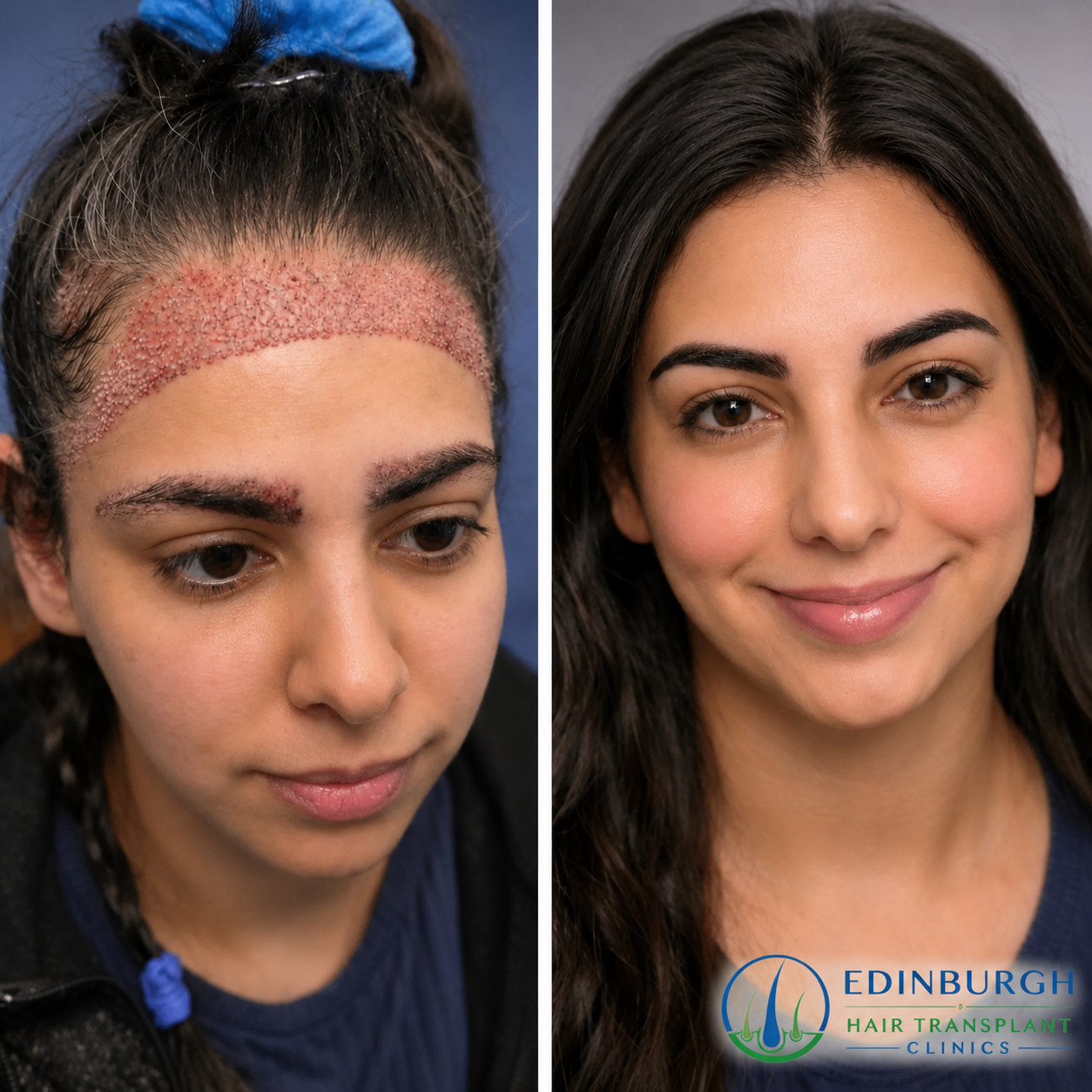
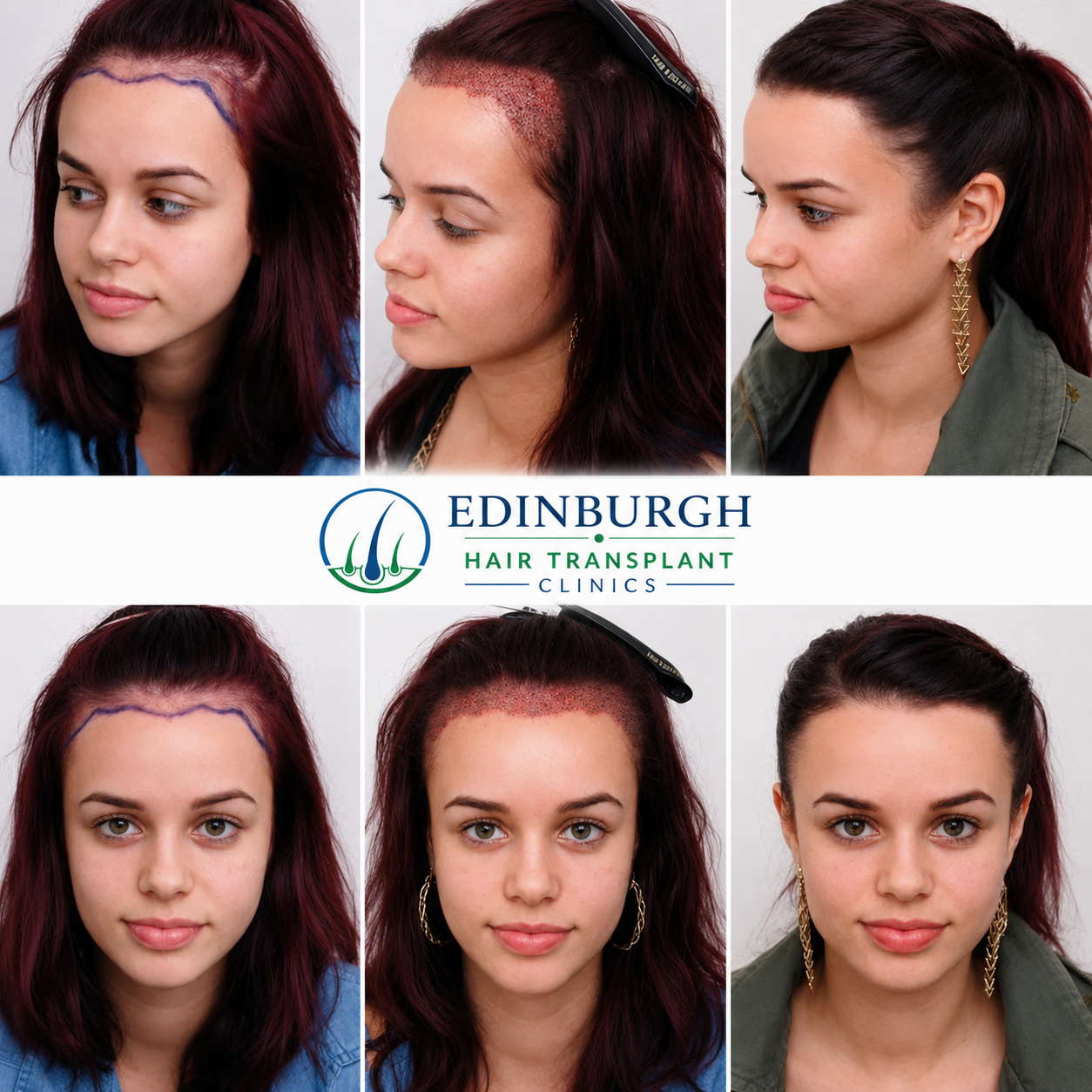
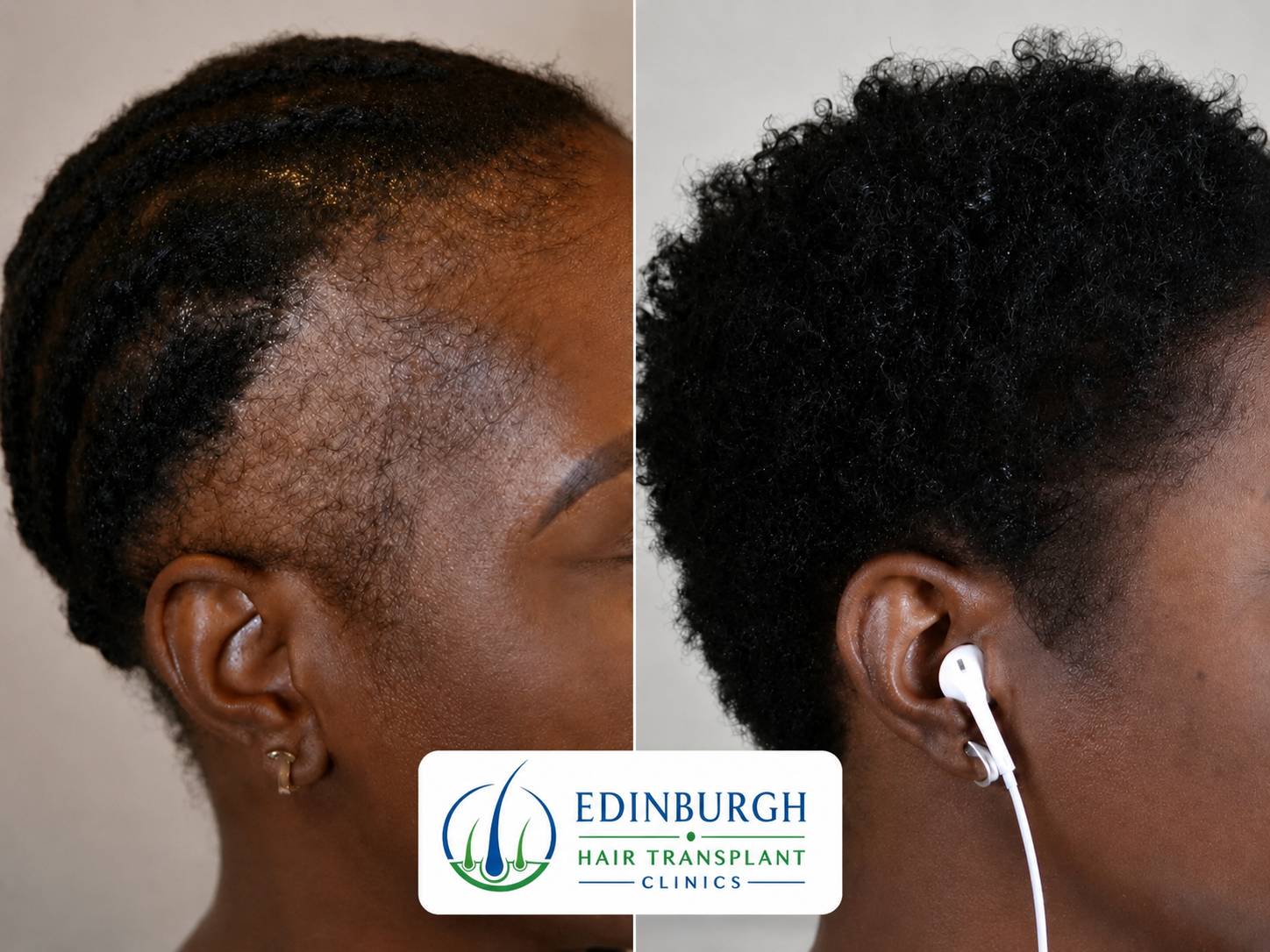
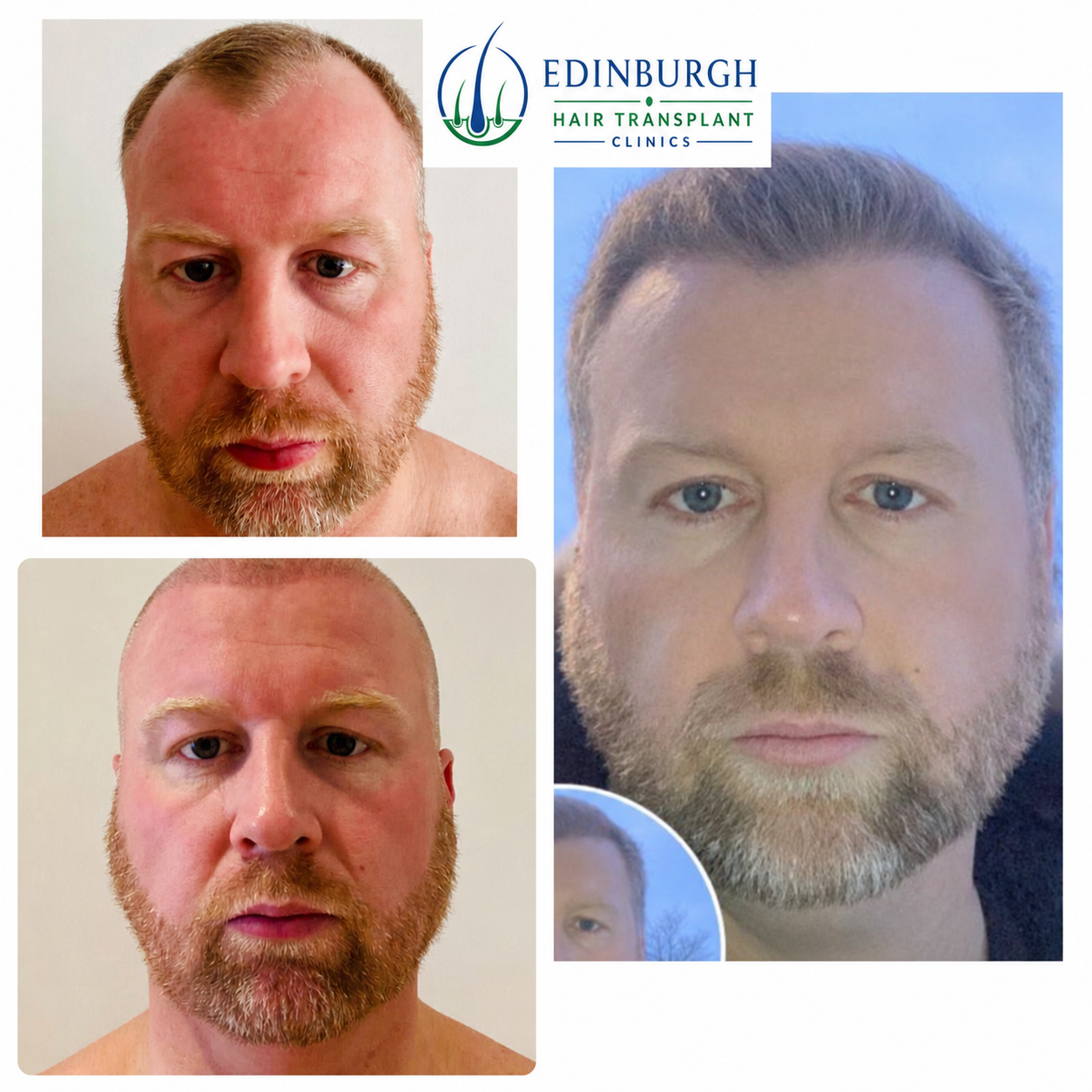
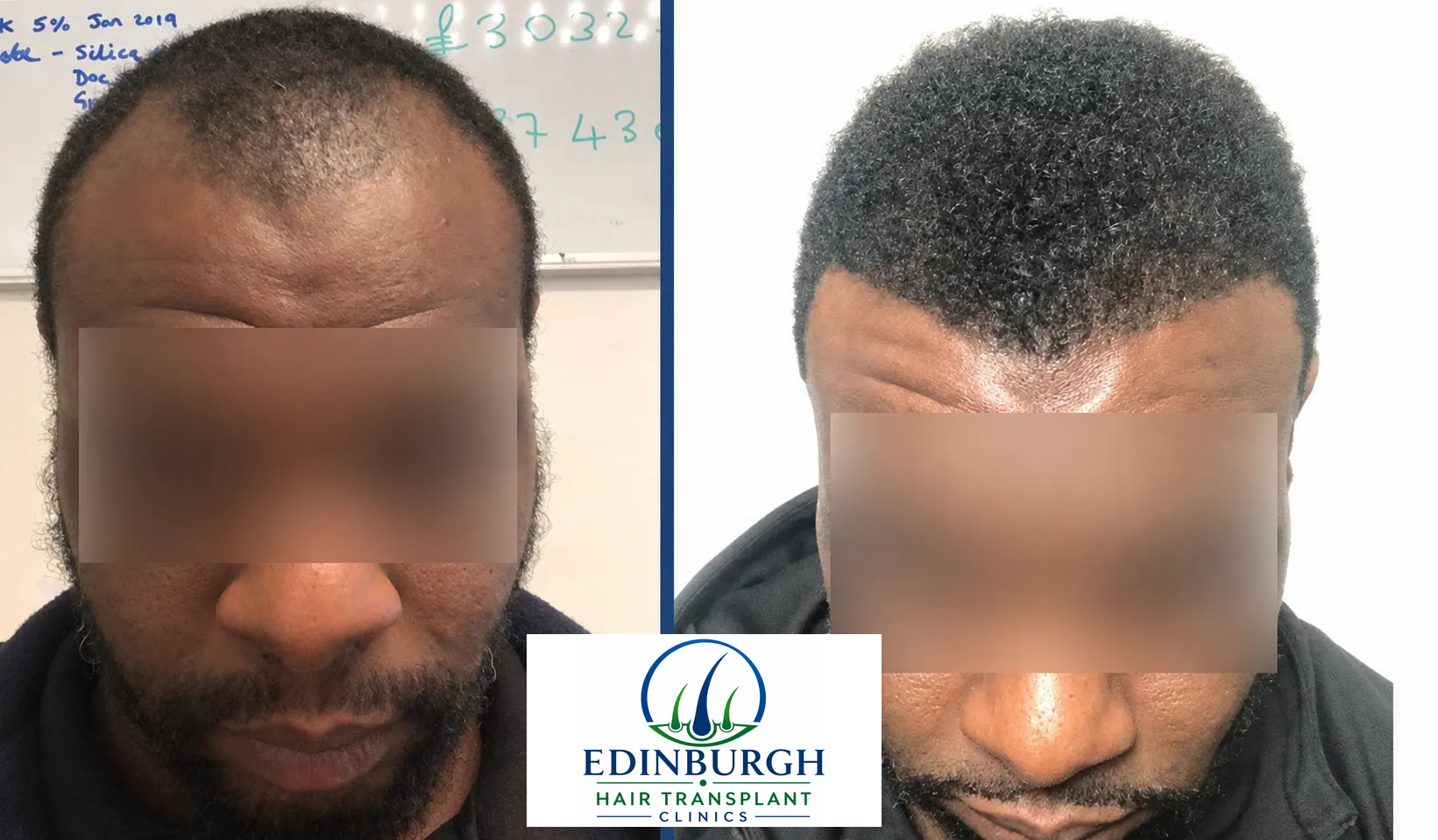
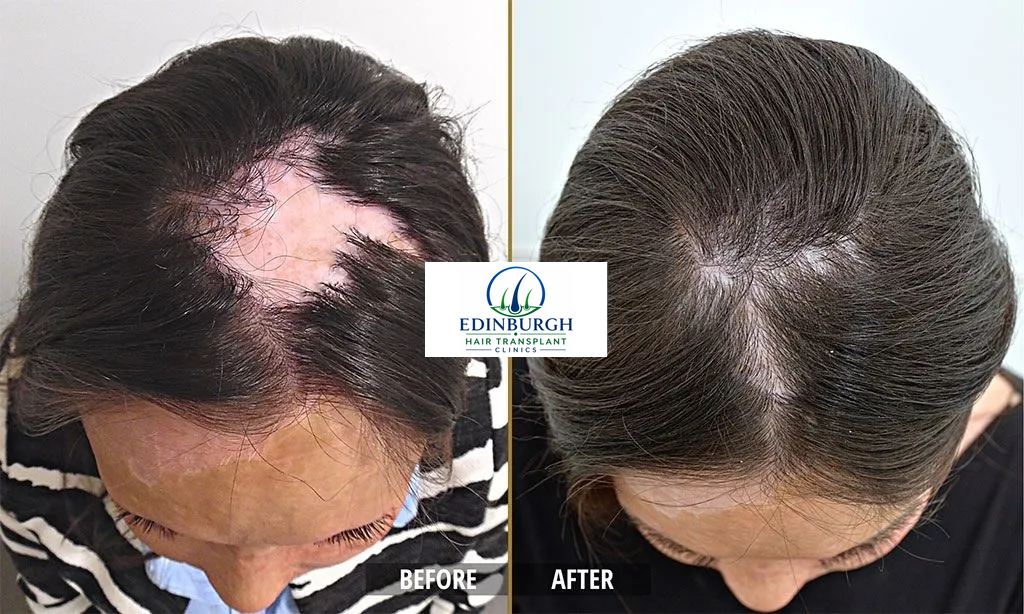
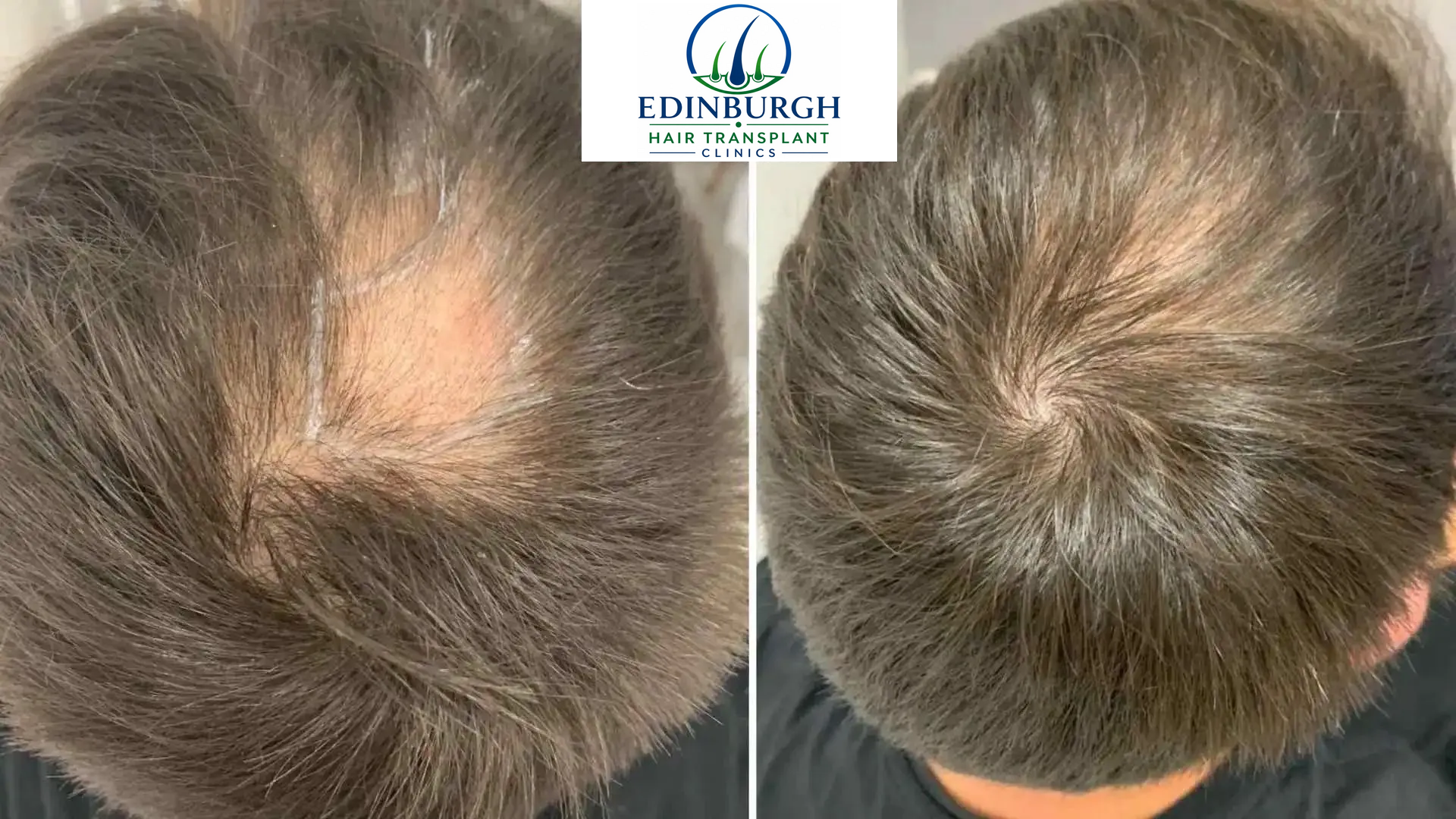
Reviews and before-and-after photographs can provide useful context, but they should not replace checking the doctor, treatment premises, surgical responsibilities, consent process and aftercare arrangements.
Verify the doctor
Check that the operating doctor is registered with the General Medical Council and holds a licence to practise.
Confirm responsibilities
Ask who creates donor and recipient skin incisions and which stages involve technicians or assistants.
Confirm the location
Establish exactly where surgery takes place and do not assume it is the same as the consultation address.
Demand individual planning
Graft numbers, technique and design should follow an assessment rather than a generic treatment package.
Review comparable cases
Look for consistent photographs of patients with similar hair loss, hair characteristics and treatment areas.
Understand aftercare
Confirm who handles questions, complications and reviews during early recovery and later growth.
12 questions to ask before paying
What is the diagnosis?
Why is transplantation appropriate for this type and stage
of hair loss?
Who is the operating doctor?
Can I verify their GMC registration and relevant
experience?
Who performs each surgical stage?
Who extracts grafts and who creates recipient sites?
Where will surgery take place?
Is the treatment location different from the consultation
address?
Why is this technique recommended?
Why FUE, DHI or FUT for my donor area and objectives?
How were graft numbers calculated?
What treatment area and density assumptions were used?
How much donor hair will remain?
What options remain if hair loss progresses?
What are the limitations?
Which areas or density expectations may not be achievable?
What are the risks in my case?
How are complications recognised and managed?
What does the quotation include?
Are medication, aftercare and reviews included?
Who provides postoperative support?
Is there an emergency or out-of-hours contact process?
What happens if I change my mind?
What are the cancellation, payment and complaints
procedures?
Take time before deciding:
Surgery is elective. Avoid paying until the treatment plan,
provider, location, risks, aftercare and total cost are clear.
Planning your Edinburgh consultation
A consultation should establish suitability before graft numbers, technique, cost or surgery are finalised.
Bring useful information
- photographs showing how your hairline has changed;
- details of family hair-loss patterns;
- medical conditions, medication and previous treatment;
- information about previous hair transplant surgery;
- examples of the result or hairstyle you are seeking;
- questions about graft numbers, risks and aftercare.
Evidence and further reading
NHS hair transplant guidance
NHS information covers hair transplant methods, early graft protection, recovery, shedding, growth and possible complications.
Read NHS hair transplant guidance BAPRAS patient information
BAPRAS explains diagnosis, finite donor supply, surgical responsibilities, alternatives and realistic growth times.
Read BAPRAS hair transplant information General Medical Council guidance
GMC guidance covers consent, patient information, practitioner responsibilities, risks and responsible cosmetic-treatment marketing.
Read the GMC cosmetic-procedure guideHair Transplant Edinburgh FAQs
Clear answers to common questions about cost, techniques, recovery, graft numbers and choosing a hair transplant clinic in Edinburgh.
How much does a hair transplant cost in Edinburgh?
The cost depends on the treatment area, estimated graft requirements, donor-area suitability, technique, hair characteristics and complexity of the case. A meaningful quotation should follow an individual assessment.
Which is better: FUE or DHI?
Neither technique is automatically better for every patient. DHI commonly uses FUE-style donor extraction, followed by placement with an implanter device. The most appropriate approach depends on the donor area, recipient area and individual treatment plan.
Is FUT hair transplantation still used?
Yes. FUT remains a recognised donor-harvesting technique for selected patients. A strip of donor tissue is removed and divided into follicular-unit grafts, leaving a linear donor scar.
How many grafts will I need?
Graft requirements depend on the size of the treatment area, existing native hair, donor density, hair calibre, hair characteristics and realistic coverage objectives. A graft number should not be confirmed without an assessment.
When can I return to work after a hair transplant?
This depends on the technique, visibility of redness and scabbing, the physical demands of your work and whether occupational headwear is required. Follow the individual recovery guidance supplied by the treating team.
Will transplanted hair fall out after treatment?
Visible transplanted hair shafts commonly shed during the weeks after treatment. This does not automatically mean that the underlying transplanted follicular units have failed.
When will new transplanted hair start growing?
Early growth may begin after several months. New hairs can initially appear fine, pale, uneven or staggered before gradually developing additional length and calibre.
Are hair transplant results permanent?
Transplanted follicles may provide long-term growth, but graft survival cannot be guaranteed. Untreated native hair can also continue thinning around or behind the transplanted area.
How can I check a hair transplant doctor?
Check that the doctor is registered with the General Medical Council and holds a licence to practise. You should also ask about their experience, surgical responsibilities, complication management and aftercare.
Is a hair transplant suitable for everyone?
No. Suitability depends on the cause and stability of hair loss, donor supply, scalp health, medical history, previous surgery, expectations and the proposed long-term treatment plan.
Considering a hair transplant in Edinburgh?
Request an assessment to discuss the cause of your hair loss, donor-area suitability, FUE, DHI or FUT options, realistic graft requirements, recovery and individual treatment costs.
Dr Harpreet Kalra
Hair transplant surgeon and practising GP · GMC 7126076
About Dr Kalra