Hair transplant pain: what to expect and how to manage it
Most patients feel little or no pain during a hair transplant. The scalp is numbed with local anaesthetic before any grafts are harvested or placed, so the operation itself is generally painless. The sharpest moment is the injection of that anaesthetic, which most people describe as a brief sting lasting a few seconds. After surgery, soreness is real but usually mild, manageable with paracetamol, and largely settled within a week.




Most patients feel little or no pain during a hair transplant. The scalp is numbed with local anaesthetic before any grafts are harvested or placed, so the operation itself is generally painless. The sharpest moment is the injection of that anaesthetic, which most people describe as a brief sting lasting a few seconds. After surgery, soreness is real but usually mild, manageable with paracetamol, and largely settled within a week.
Here is what to expect in plain terms:
- The injection: a short pinch or sting as the anaesthetic goes in, typically the most uncomfortable moment of the whole procedure.
- During the operation: once the scalp is numb, most patients feel pressure or movement but not pain.
- Early recovery (days 1–4): mild to moderate soreness, mainly in the donor area, usually controlled with over-the-counter analgesics.
- Analgesic need: most patients need simple painkillers for three to seven days; opioids are rarely required.
The sections below cover what the injection actually feels like, how FUE and FUT differ for post-op discomfort, a day-by-day pain timeline, UK-relevant medicine guidance, and the red flags that mean you should call the clinic or NHS 111.
Table of Contents
- What does hair transplant pain feel like during the operation?
- How does post-hair transplant discomfort change over time?
- How do FUE and FUT compare for pain and recovery?
- How do clinics manage hair transplant pain in the UK?
- Practical steps to reduce discomfort at home
- When should you contact the clinic or seek urgent care?
- How pain typically evolves: a month-by-month patient timeline
- Key takeaways
- The part most guides get wrong about hair transplant pain
- Planning your procedure with Edinburgh Hair Transplant Clinics
- Useful sources and further reading
What does hair transplant pain feel like during the operation?
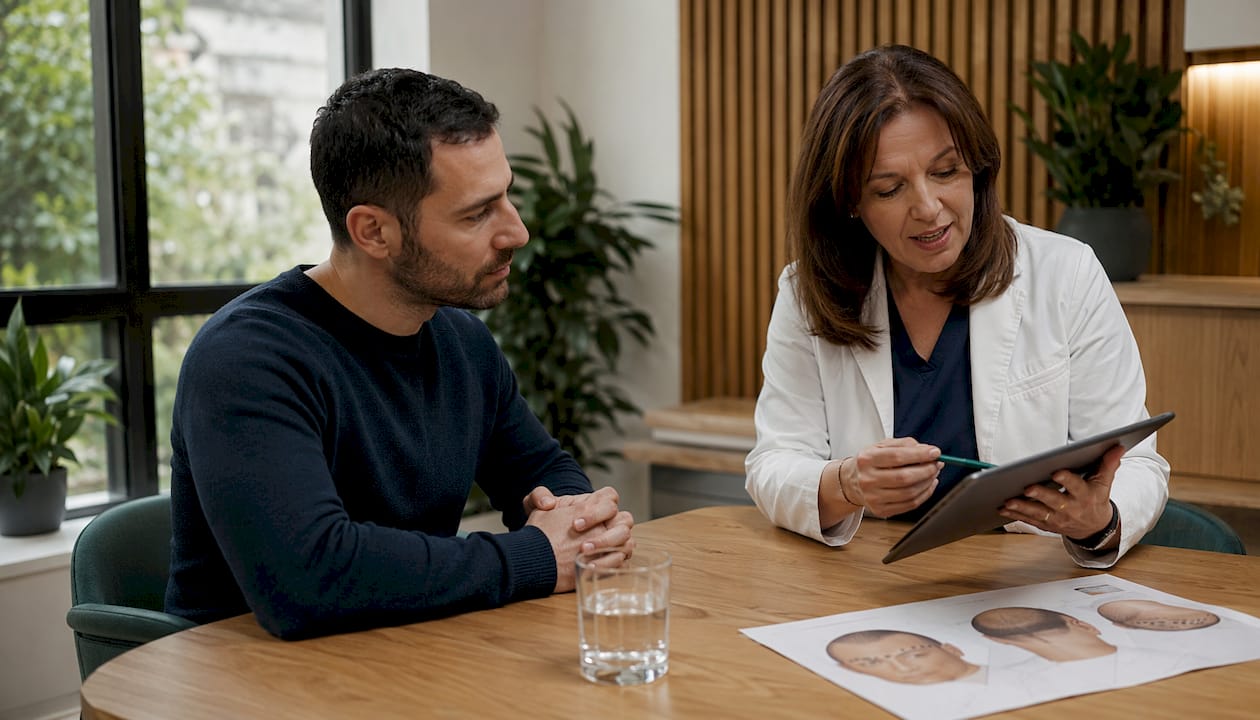
The NHS confirms that hair transplants are performed under local anaesthetic, with patients awake throughout but not expected to feel pain once the anaesthetic is working. Sedation or an anxiolytic is sometimes offered alongside it for patients who are particularly anxious, and some clinics include this as standard.
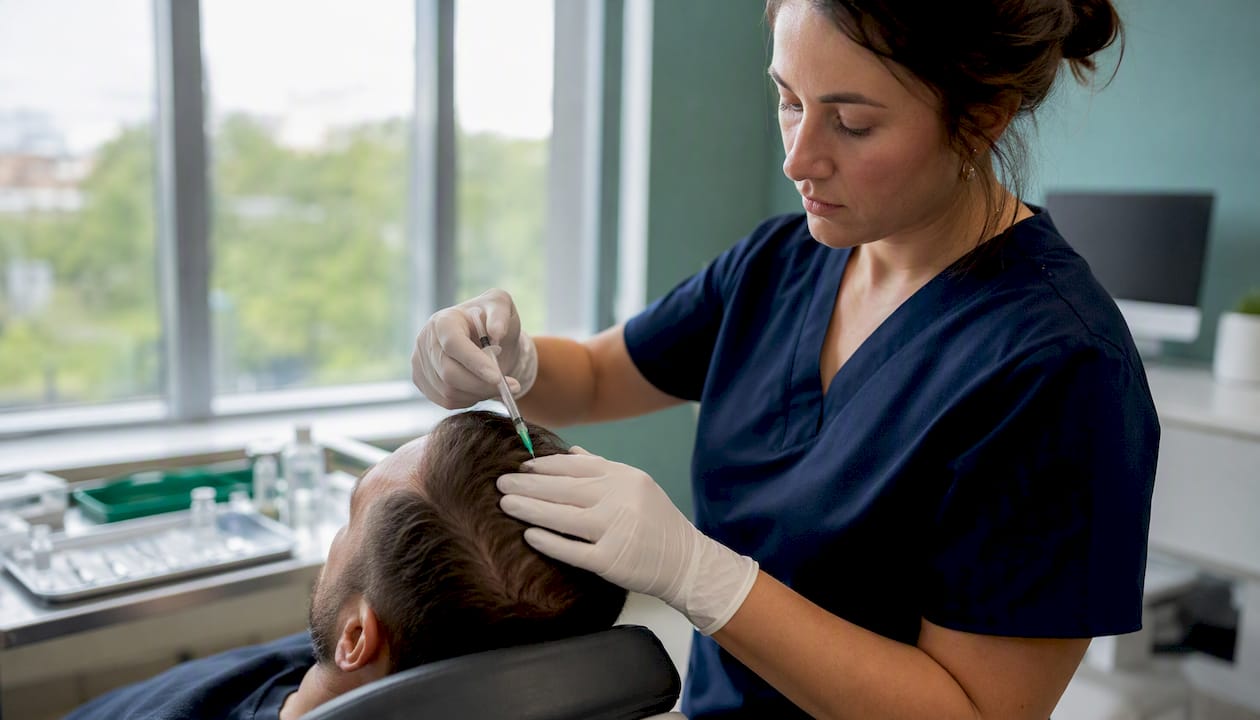
The injection itself is the part most patients remember. A fine needle delivers anaesthetic around the scalp in a series of small deposits, and each one produces a brief sting. The whole injection phase typically takes a few minutes. After that, the scalp is numb and the harvesting and implantation that follow are largely sensation-free. Patients commonly report feeling tugging, vibration, or mild pressure, but not sharp pain.
Clinics use several techniques to make the injection phase easier. Buffering, warming, and nerve or field blocks all reduce the sting of local anaesthetic infiltration, and most experienced surgeons use at least one of these routinely. A topical numbing cream applied beforehand can also blunt the first needle contact. If you are particularly anxious about needles, ask your surgeon about sedation options at your pre-operative consultation.

Pro Tip: Ask specifically whether your clinic uses buffered or warmed anaesthetic solution. This single technical step is one of the most effective ways to reduce injection discomfort, yet many patients never think to ask about it.
Most intra-operative discomfort comes from the injection process itself. Once the field block is established, the rest of the procedure is a matter of patience rather than pain.
How does post-hair transplant discomfort change over time?
Pain after a hair transplant follows a predictable arc. It peaks in the first 24–48 hours, then drops off steadily. Understanding that arc makes it much easier to plan time off work and manage analgesics sensibly.
Pain by phase
| Phase | Typical pain score range | Main location | Notes |
|---|---|---|---|
| First 24 hours | Mild to moderate | Donor area | Peaks as anaesthetic wears off; analgesics needed |
| Days 1–4 | Mild | Donor area, some recipient tightness | FUT scores higher than FUE in this window |
| Days 5 onward | Minimal | Generalised scalp | Soreness fades; itching may begin |
| Weeks 3–12 | Very low | Variable | Occasional numbness or tingling; rarely painful |
A study of 241 patients found that FUT patients reported higher pain scores on days 1–4, while FUE patients had minimal pain by day one. Both groups were largely pain-free within the first week.
The donor area is where most post-operative soreness originates. In FUT, suture tension adds to that discomfort. The recipient area tends to feel tight or sensitive rather than acutely painful. Some patients describe the scalp feeling sunburnt for the first couple of days.
- Analgesics are usually needed for three to seven days.
- Itching in weeks two to four is normal and signals healing, not damage.
- Temporary numbness or altered sensation in the scalp can persist for several weeks, particularly after FUT.
- Swelling of the forehead and upper eyelids is common two to six days after surgery, not painful but uncomfortable.
By day seven, the majority of patients have stepped down from regular analgesics to taking them only as needed. By week two, most describe the scalp as tender rather than sore.
How do FUE and FUT compare for pain and recovery?
The harvesting method is the single biggest factor in how much post-operative discomfort you experience. Both techniques use the same local anaesthetic during surgery, so intra-operative pain is similar. The difference shows up in the days that follow.
| Feature | FUE | FUT (strip) |
|---|---|---|
| Donor-area pain (days 1–4) | Mild (typically 1–3/10) | Moderate level |
| Pain duration | Largely resolved by day 1–2 | Largely resolved by day 3–4 |
| Donor-area scarring | Scattered small circular marks | Single linear scar |
| Analgesic need | Usually 1–3 days | Usually 2–4 days |
| Numbness / sensation changes | Transient, localised | More common; can persist longer |
| Return to desk work | Often several days | Often several days |
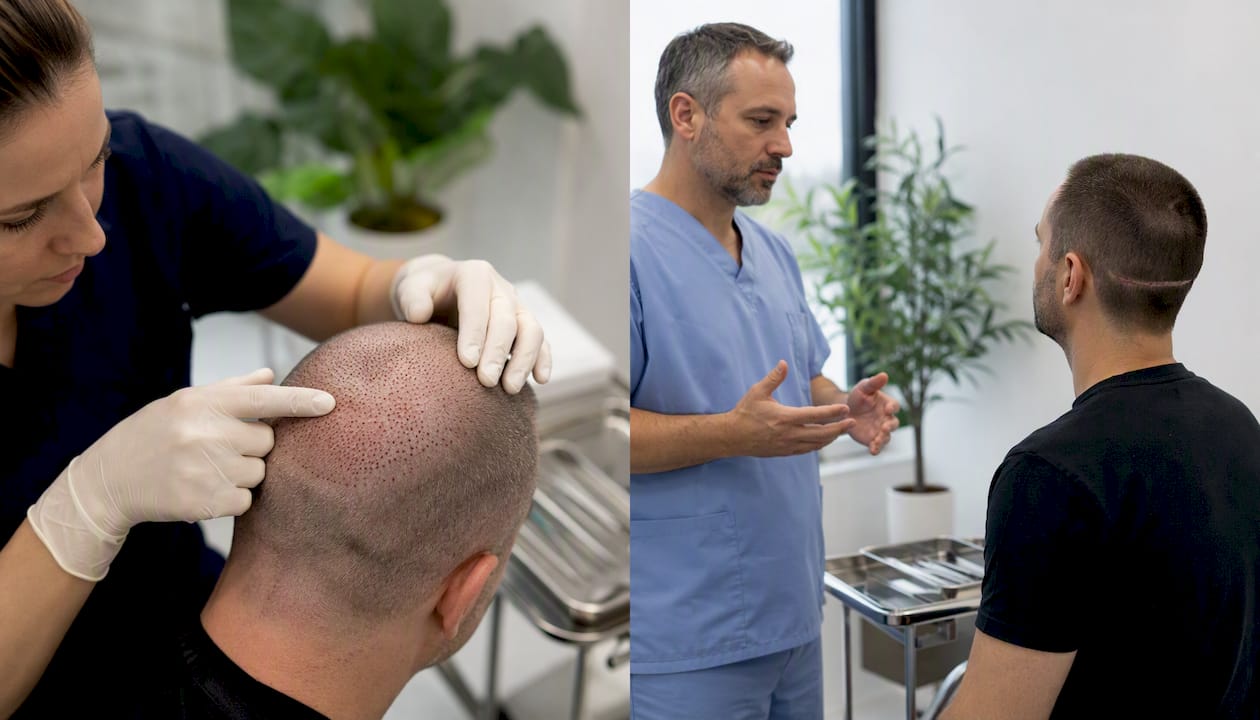
FUT produces a linear wound held with sutures, and that suture tension is the main reason early pain scores are higher. The comparison study found FUT pain largely resolved by day three, while FUE produced minimal pain by day one. FUE is now the more widely used technique partly because of this faster recovery profile, though sensory disturbances such as temporary numbness remain a common early complaint with both methods.
Who tends to be guided towards which method:
- FUE suits patients with lower pain tolerance, those returning to work quickly, or anyone concerned about a visible linear scar.
- FUT is often chosen when a larger number of grafts is needed in a single session, or when the donor density makes FUE less efficient.
The right choice depends on your hair-loss pattern, donor area, and long-term goals. A thorough consultation with your surgeon is the only way to weigh those factors properly for your situation. Edinburgh Hair Transplant Clinics offers FUE and FUT as part of its consultation-led planning process, so the method is chosen around you rather than defaulted to.
How do clinics manage hair transplant pain in the UK?
Standard pain management for a hair transplant in the UK follows a straightforward ladder: local anaesthetic during surgery, simple analgesics afterwards, and prescription medicines only when genuinely needed.
Medicines commonly used
- Paracetamol (1g every 4–6 hours, up to 4g daily): the first-line choice for most patients; safe, effective, and widely available over the counter.
- Ibuprofen and other NSAIDs: often used alongside paracetamol for the first few days, but not universally prescribed. NSAIDs can increase bleeding risk and are withheld in patients on anticoagulants, those with kidney disease, or anyone with a history of peptic ulcers. Always confirm with your surgeon before taking them.
- Clinic-prescribed analgesics: some clinics prescribe a short course of a stronger analgesic for the first 24–48 hours, particularly after FUT. This varies by clinic and patient history.
- Anxiolytics or mild sedation: offered pre-operatively at some clinics for patients with needle anxiety; not a pain medicine but raises the effective pain threshold.
Buffering and warming the anaesthetic solution, combined with field or nerve blocks, reduces the amount of anaesthetic needed and extends its duration, which means fewer top-up injections during the procedure.
Alcohol should be avoided for at least 48 hours before and after surgery; it interacts with anaesthetics, increases bleeding, and can blunt the effect of analgesics. If you take anticoagulants such as warfarin or apixaban, discuss stopping or bridging with your GP well before the procedure date.
Safety note: Never start, stop, or change a prescribed medicine on the basis of general guidance. Discuss your full medication list with your surgeon and GP before the procedure.
Honest patient resources consistently suggest that simple analgesics are usually sufficient for hair transplant recovery, with opioid-level pain control rarely needed.
Practical steps to reduce discomfort at home
The first fortnight after surgery is where self-care makes the biggest difference to how comfortable you feel. None of these steps are complicated, but the timing matters.
What to do
- Sleep with your head elevated at roughly 45 degrees for the first three to five nights. This reduces swelling and takes pressure off the donor area.
- Take paracetamol before the anaesthetic wears off on the day of surgery rather than waiting until pain arrives. Pre-emptive dosing keeps levels steady and avoids the catch-up problem.
- Apply a cold compress (not directly on grafts) to the forehead to ease swelling in the first 48 hours. Wrap ice in a cloth; never apply it directly to the scalp.
- Wear loose, front-opening clothing for the first week to avoid catching the recipient area when dressing.
- Keep the head still and supported when resting; avoid any position that puts direct pressure on the donor strip or graft sites.
What to avoid
- Hot baths, saunas, or steam rooms for at least two weeks.
- Heavy lifting or strenuous exercise for ten to fourteen days; raised blood pressure increases swelling and bleeding risk.
- Touching, scratching, or picking at grafts, even when itching begins.
- Alcohol for at least 48 hours post-surgery.
- Bending forward at the waist repeatedly in the first 72 hours; it drives fluid towards the forehead.
Pro Tip: The gravity position is worth taking seriously. Staying supine or leaning the head back so the face is roughly parallel to the ceiling for the first 36 hours diverts lymphatic fluid away from the forehead and can markedly reduce the eyelid and brow swelling that many patients find the most socially disruptive part of recovery. It is a simple, cost-free measure that most patients underestimate.
For a full step-by-step breakdown of what to do in the days and weeks after surgery, the hair transplant aftercare guide at Edinburgh Hair Transplant Clinics covers each phase in detail.
When should you contact the clinic or seek urgent care?
Some discomfort after a hair transplant is expected. The following symptoms are not normal and need prompt attention.
Red flags — contact your clinic immediately
- Pain that is getting worse rather than better after day three.
- Fever above 38°C combined with scalp redness or warmth.
- Spreading redness, swelling, or pus at the donor or recipient site.
- Bleeding that does not stop with gentle pressure after ten minutes.
- Numbness or altered sensation that is worsening rather than improving beyond week four.
- Severe or unusual headache in the days following surgery.
Who to call and what to say
Call your clinic first. Have the following ready: the date of your procedure, the technique used (FUE or FUT), your current symptoms and when they started, and the analgesics you have taken. That information lets the clinical team triage quickly.
If you cannot reach the clinic and symptoms are severe, call NHS 111 or attend A&E. The NHS advises contacting the treating clinic for unexpected or severe post-operative pain, but 111 is the right route if that is not possible out of hours.
Mild swelling, itching, and tenderness are all normal. The distinction to hold onto is direction: normal post-op discomfort gets better day by day. Pain that escalates, spreads, or comes with systemic symptoms needs professional assessment.
How pain typically evolves: a month-by-month patient timeline
Understanding the full arc from surgery day to month twelve helps set realistic expectations and shows where clinic support makes a difference.
- Day of surgery: local anaesthetic keeps the scalp numb throughout. Most patients are surprised by how manageable the procedure is. Clinic staff administer analgesics before discharge and provide written aftercare instructions.
- Days 1–3: donor-area soreness peaks. Paracetamol (with or without ibuprofen, as advised) manages this well for most patients. The clinic typically makes a 48–72-hour follow-up call to check on pain levels and answer questions.
- Days 4–7: soreness fades noticeably. Scabs form on the recipient area. A one-week check-in with the clinic confirms healing is on track and addresses any concerns about swelling or sensation.
- Weeks 2–4: the scalp itches as healing progresses. Transplanted hairs begin to shed, which is normal. Sensation in the donor area starts to return, sometimes with brief tingling.
- Months 1–3: the scalp feels largely normal. A one-month review allows the clinic to assess donor healing, check for any sensory changes, and discuss the growth timeline ahead.
- Months 4–12: new hair growth begins. No pain is expected at this stage; any persistent numbness or discomfort beyond month three warrants a clinic review.
The month-by-month recovery timeline at Edinburgh Hair Transplant Clinics gives a detailed breakdown of what to expect at each stage, including when shedding is normal and when to flag a concern.
Edinburgh Hair Transplant Clinics builds pre-operative counselling into every consultation so patients understand the pain arc before surgery day. Sedation options, harvest method, anaesthetic technique, and post-operative analgesic plans are all discussed and personalised to your medical history. If your history includes chronic pain conditions, anticoagulant use, or previous scalp surgery, raise this at consultation so the plan can be adjusted accordingly.
Key takeaways
A hair transplant is far less painful than most patients expect: local anaesthetic removes intra-operative pain, and simple analgesics handle the short recovery period that follows.
| Point | Details |
|---|---|
| Intra-operative pain | Local anaesthetic means most patients feel pressure, not pain; the injection sting is the sharpest moment. |
| FUE vs FUT recovery | FUE pain is minimal by day one; FUT soreness typically resolves by day three to four due to suture tension. |
| Peak discomfort timing | Donor-area soreness peaks in the first 24–48 hours and is usually managed with paracetamol for three to seven days. |
| Home care priority | Head elevation, pre-emptive paracetamol, and the gravity position for the first 36 hours reduce swelling and discomfort significantly. |
| Edinburgh Hair Transplant Clinics | Consultation-led planning in Edinburgh covers anaesthetic technique, method choice, and a personalised aftercare plan to minimise pain at every stage. |
The part most guides get wrong about hair transplant pain
The standard reassurance you read everywhere is “it doesn’t hurt.” That is technically true during the procedure, but it glosses over the part that actually catches patients off guard: the first night.
The anaesthetic wears off two to four hours after surgery. If you have not taken paracetamol before that happens, you will feel it. Not dramatically, but enough to make the evening uncomfortable when it did not need to be. The fix is pre-emptive dosing, and it is almost never mentioned prominently in the guides that spend three paragraphs telling you the operation is painless.
The other thing worth saying plainly: swelling is often more disruptive than pain. Forehead and eyelid oedema two to four days after surgery can be significant enough that patients do not want to be seen in public. It is not dangerous, but it is not nothing either. Clinics that use triamcinolone in the tumescent solution see dramatically lower rates of this, and it is worth asking your surgeon specifically whether that is part of their protocol.
The broader point is that pain management after a hair transplant is not complicated, but it does require a bit of active preparation rather than passive waiting. Patients who go in knowing the timeline, who take their first dose of paracetamol before the anaesthetic fades, and who sleep correctly that first night consistently report a more comfortable recovery than those who wing it.
Planning your procedure with Edinburgh Hair Transplant Clinics
Patients who know what to expect before surgery day recover more comfortably than those who do not. That is the practical case for a thorough consultation, and it is exactly what Edinburgh Hair Transplant Clinics builds its process around.
Every patient assessment at Edinburgh Hair Transplant Clinics covers hair-loss pattern, donor area, medical history, and long-term graft requirements before a method is recommended. That means the anaesthetic approach, harvest technique (FUE, DHI, or FUT), and post-operative analgesic plan are chosen around your specific situation, not applied as a default. Aftercare support, including follow-up calls and a detailed recovery guide, is part of the package from day one.
If you are weighing up whether a hair transplant is right for you, or want to understand which technique suits your pain tolerance and recovery timeline, request a consultation to discuss your options with the team in Edinburgh.
This article provides general information only and does not replace personalised medical advice. Discuss your medical history, current medications, and individual circumstances with your surgeon and GP before proceeding.
Useful sources and further reading
- Hair transplant — NHS: Official UK patient guidance on what to expect, anaesthetic use, and when to seek help after surgery.
- Comparison of postoperative pain according to the harvesting method used in hair restorative surgery (PMC): Peer-reviewed study of 241 patients comparing FUE and FUT pain scores across the first four post-operative days.
- Techniques to reduce pain associated with hair transplantation: optimizing anesthesia and analgesia (PubMed): Clinical review of buffering, warming, and nerve block techniques that reduce injection discomfort.
- Gravity position to prevent facial oedema in hair transplantation (ISHRS Hair Transplant Forum International): Evidence for the head-position technique that reduces post-operative forehead and eyelid swelling.
- Hair transplantation: preventing post-operative oedema (PMC): Study of 340 patients comparing physical and pharmacological methods for preventing post-operative swelling; found triamcinolone in tumescent solution most effective.
- Complications in follicular unit excision hair transplantation (Frontiers in Medicine): Systematic review covering FUE complication rates, including postoperative pain and sensory disturbances.
- Royal College of Surgeons — after cosmetic surgery: Authoritative UK guidance on post-operative care, recovery expectations, and when to seek professional help after cosmetic procedures.
Recommended
- Hair Transplant Timeline Edinburgh | Month by Month
- Hair Transplant Aftercare Edinburgh | Recovery Guide
- Hair Transplant Shedding & Shock Loss Edinburgh
- Hair Transplant Edinburgh in 2026: Cost, Techniques, Recovery and How to Choose a Clinic
Dr Harpreet Kalra
Hair transplant surgeon and practising GP · GMC 7126076
About Dr KalraQuestions and answers
What should I do if I feel pain during the procedure?
Tell the surgical team. Do not assume you need to tolerate it; they can assess what you are feeling and whether the anaesthetic or treatment plan needs attention.
Can I take my usual painkillers afterwards?
Ask your treating team which medicines are suitable for you. Your medical history, other medicines and any allergies matter, so avoid relying on a general online pain-relief schedule.
Should I ignore pain that is getting worse during recovery?
No. Contact your treating clinic for advice rather than assuming increasing pain is part of routine healing. Explain when it began and any other changes you have noticed.